
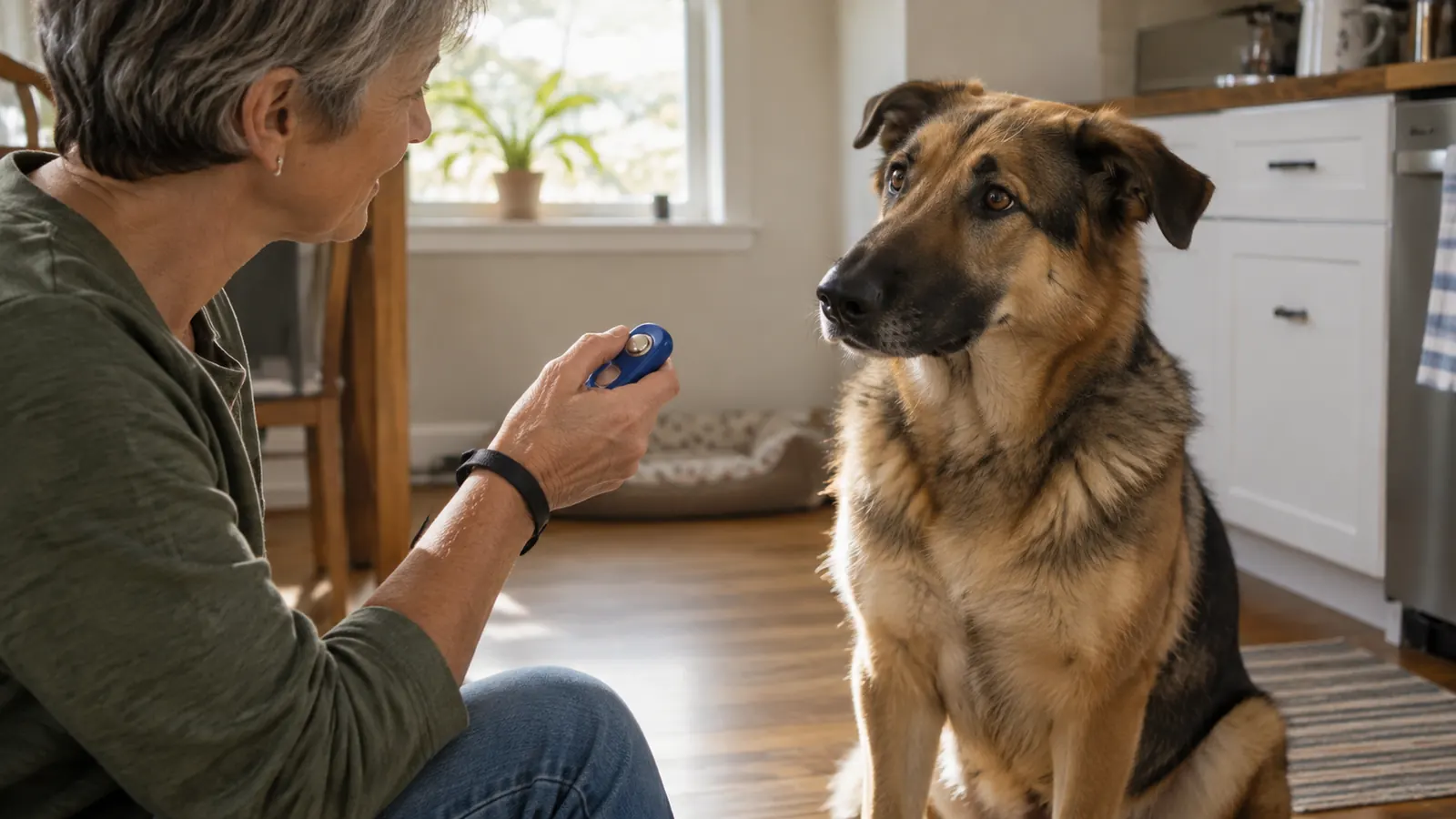
The first time I tried a clicker, I clicked, Ridley looked at me like I had dropped a fork on the floor, and I immediately wondered if I had wasted my money. I am Carla, and I live in Sun Prairie, Wisconsin, with my husband Glen and Ridley, a 55-pound shepherd mix we adopted when he was about 18 months old. He came to us pulling on the leash, lunging at other dogs, and panicking when left alone. Two years in, I have learned that training gear only works when the person using it understands the job. So when I picked up the HoAoOo dog training clicker, I decided to test it the way I actually train: short sessions, every day, with notes.
This review covers the first eight weeks of daily marker training with the HoAoOo clicker, plus what two years of use since then has shown me. I used it for sit, down, stay, loose-leash walking, and the one behavior that mattered most to me: getting Ridley to look at me instead of fixating on another dog across the street. The clicker did not fix everything, and I will tell you exactly where it fell short. But it earned a permanent spot in my treat pouch.
The Quick Verdict
A simple, loud, reliable clicker that does exactly what a marker should do. It will not train your dog for you, but it will make your timing better and your sessions clearer, especially if you are new to marker training.
Amazon Check Today's Price →The clicker that finally made my timing honest
After eight weeks of daily sessions, the HoAoOo clicker is the one I keep reaching for. It is loud enough to hear on a windy walk, light enough to forget in my pocket, and simple enough that I stopped fumbling and started clicking on time.
Amazon Check Today's Price on Amazon →How I've Used It
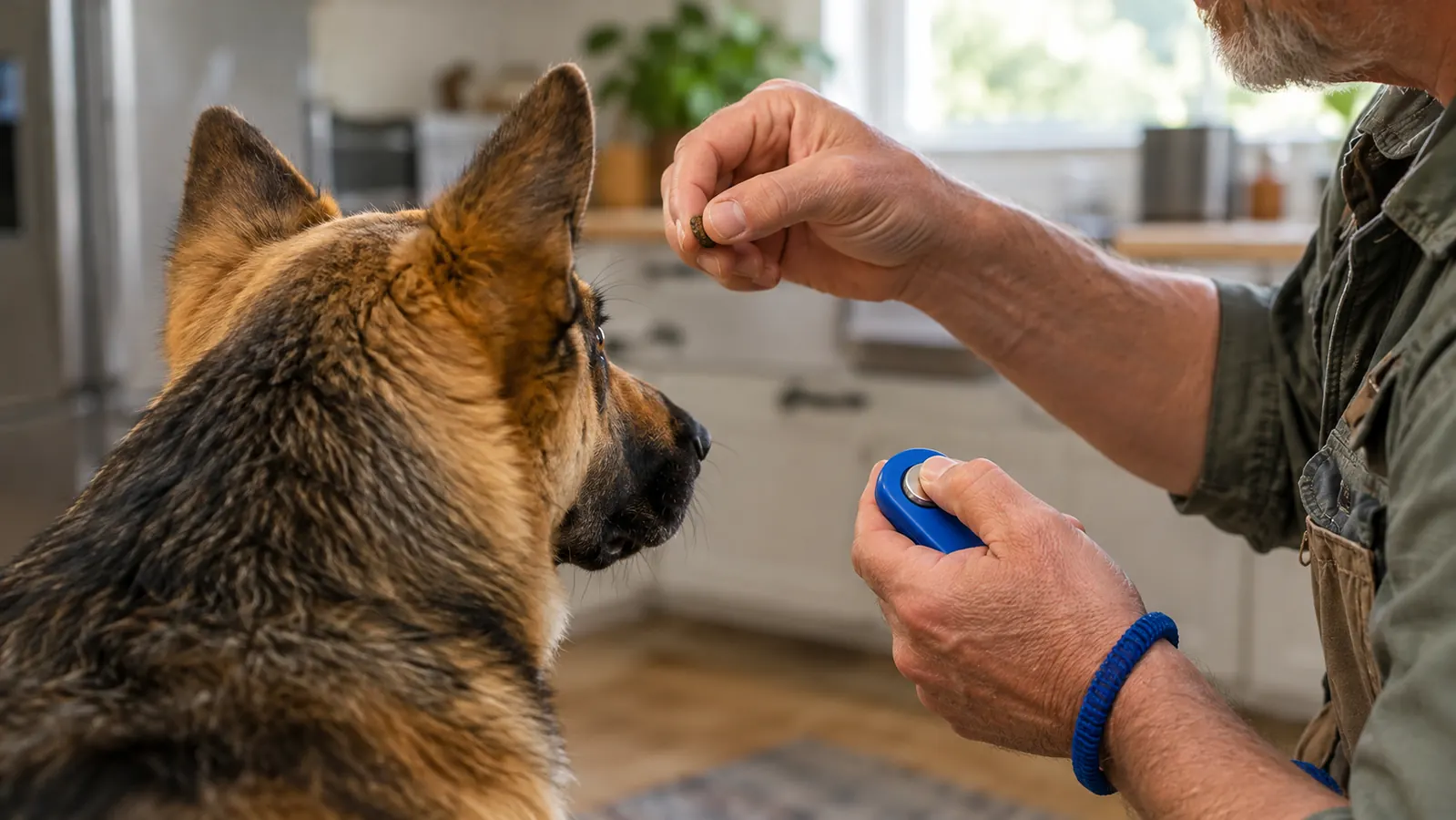
I started the way every clicker guide tells you to start: charging the clicker. For three days, I clicked and immediately gave Ridley a piece of chicken. Click, treat. Click, treat. By day two, the sound alone made his ears swivel. That is the whole point of a marker. The click says 'yes, exactly that behavior, and a reward is coming.' It does not say 'good boy.' It does not say 'almost.' It says 'that precise second.'
Charging took about three short sessions over two days. Click, treat. Click, treat. Twenty or so repetitions per session, sitting on the kitchen floor with a bowl of tiny cut-up treats. By the third session, Ridley's head snapped toward me the instant he heard the click, before the treat was even out of my hand. That head snap is how you know the click means something to him.
After charging, I used the HoAoOo clicker in five-minute sessions, twice a day, in the kitchen and the backyard. I clicked for a sit, then a down, then a stay that I slowly stretched from three seconds to thirty. I clicked for loose-leash walking in the driveway before we ever attempted a full neighborhood loop. And I clicked for attention: every time Ridley chose to look at me instead of the squirrel, the mail truck, or the neighbor's dog, he heard the click and got the treat.
The wrist strap mattered more than I expected. I clipped it to my treat pouch, and it has survived two years of daily use, including one incident where Ridley bolted after a rabbit and I dropped everything. The clicker stayed on my wrist. The keyring is small, but I never used it. The strap was enough.
In practice that meant I always had it on when a training chance popped up. Ridley would lie down calmly while the mail carrier walked by, and the clicker was already in my hand to mark it. Those unplanned moments ended up being some of our most valuable training, and I would have missed half of them if the clicker had been in a drawer.
What a Clicker Actually Does (and What It Doesn't)
Here is the honest version. A clicker is not a remote control. It does not make a dog sit, and it does not stop barking. It is a marker: a sound that tells your dog the exact moment they did something right. The magic is not in the box. The magic is in the timing, and the timing is exactly what the clicker forces you to improve.
Before the clicker, I trained with the word 'yes.' The problem was that my 'yes' was sloppy. Sometimes I said it a half-second late. Sometimes I said it while I was still reaching for a treat. Ridley is a smart dog, and he adapted to my sloppiness by guessing. The clicker fixed that because it is a sound with no other meaning. It never gets used for anything except marking behavior, so it stays clean.
The click fixed that because it sounds exactly the same every single time. It does not get louder when I am excited or softer when I am tired. It also cuts through background noise in a way my voice does not. In the backyard, with a lawnmower going two houses down, the click still landed clearly, and Ridley's ears went straight back toward me.
The HoAoOo clicker is a simple box-style clicker with a metal tongue that makes a sharp, consistent click. It is loud enough to hear from across the yard, which matters when you are training a dog who is thirty feet away. It is also loud enough that I warn visitors before I use it indoors. The sound is not harsh, but it is definite.
The First Month: What Improved and What Didn't
Week one was clumsy. I clicked too late, I clicked twice by accident, and I once clicked when Ridley was mid-sneeze, which he correctly interpreted as 'sneeze again and get chicken.' He did. That was my fault, not the clicker's. The HoAoOo clicker has a firm button that takes a little pressure to press, and I actually liked that. It made accidental clicks less likely once I got used to the feel.
The fix was practicing my timing without Ridley. I sat on the couch, bounced a tennis ball, and tried to click at the exact moment it hit the floor. It sounds ridiculous, and Glen laughed at me, but after a few evenings my clicks landed where I meant them to. My training with Ridley improved the very next session.
By week three, something shifted. Ridley started offering behaviors. He would sit, then look at me, then try a down, then look again. That is the real sign that marker training is working: the dog starts experimenting because they know the click will tell them which experiment worked. I had read about that moment in training books. I did not believe it would happen with my anxious, reactive dog. It did.
We used that to teach things I had struggled with for months. A solid down-stay on his mat while we ate dinner. Touching my palm with his nose, which became a handy way to move him off the couch without pulling his collar. A look at me when another dog appeared at a distance, which is now one of the most useful things he knows. Each one went faster than the last, because he had learned how the game works.
The thing that did not improve quickly was his reactivity. Clicking for attention during a walk helped, but it did not erase two years of fear in eight weeks. I want to be direct about that because a lot of clicker reviews make it sound like a few sessions will fix a reactive dog. It will not. What it did was give us a foundation. Ridley learned that he could look at me during a stressful moment and be rewarded for it. That is not a cure. It is a bridge.
What the clicker did give us was a way to mark small wins with other dogs. If Ridley noticed a dog across the street and stayed quiet for even a second, I clicked and treated. Over many walks those seconds grew. It was slow, but it was progress I could measure, and that kept me going.
By week three, Ridley started offering behaviors on his own. That is the real sign marker training is working: the dog starts experimenting because they know the click will tell them which experiment worked.

Build Quality and Everyday Use
The HoAoOo clicker is a small plastic box with a metal tongue, a wrist strap, and a keyring. It weighs almost nothing. I kept it in my coat pocket all winter, and it survived rain, a trip through the washing machine on accident, and being stepped on by a 55-pound dog who was very excited about a squirrel. It still clicks cleanly.
The button has a satisfying snap. It is not mushy, and it does not require a hard squeeze. I have small hands, and I could press it comfortably while holding a leash and a treat pouch. The strap is long enough to go around my wrist but not so long that it dangles. The keyring is there if you want it, but I never used it because the strap worked better.
The metal tongue inside is the part that makes the sound, and it has held up well. I have dropped it on the kitchen tile and the patio more times than I can count, and it still clicks the same. The plastic shell has a few scuffs, nothing more.
One thing to know: the clicker is loud. That is a feature for outdoor training, but it can startle a sensitive dog if you click right next to their ear. I clicked near Ridley's head once during a close-up session and he flinched. After that, I clicked at chest level, away from his face. That is a training adjustment, not a design flaw, but it is worth knowing before you start.
If your dog is sound sensitive, start by clicking inside your pocket or behind your back to muffle it. Ridley flinched at the very first click, so I spent one session clicking with the clicker wrapped in a dish towel. By the next day he loved the sound, and I never needed the towel again.
Who This Is For
This clicker is for owners who are ready to do the work. If you want to improve your timing, teach a reliable sit, down, stay, or loose-leash walking, or build a stronger bond with a dog who struggles with focus, the HoAoOo clicker is a great place to start. It is also a good choice for training other animals. I used it with a friend's cat, and the cat learned to touch a target stick in about ten minutes. The clicker does not care what species is on the other end.
It is especially good for anyone with a dog who gets overwhelmed by talking. Ridley shuts down if I chatter at him during training. The click is short and neutral, and he can process it without getting wound up.
Who Should Skip It
Skip it if you are not going to use it consistently. A clicker only works if you click and treat, every time, for weeks. If you want a quick fix for barking or jumping, this is not it. Skip it if you prefer verbal markers and your dog already responds well to 'yes' or 'good.' If it is not broken, you do not need to fix it. And skip it if you have a dog who is genuinely frightened of sharp sounds. You can train with a softer marker, like a pen click or a word, and get the same result.
And skip it if juggling a leash, treats and a clicker sounds like too much right now. A consistent verbal marker like a crisp yes works on the same principle. You can always add a clicker later once the rest of the routine feels natural.
What I Liked
- Crisp, consistent sound that marks the exact moment a dog gets it right
- Wrist strap keeps it on hand for unplanned training chances
- Loud enough to cut through backyard and street noise
- Small, light and tough enough to survive being dropped
- Inexpensive enough to keep a spare
Where It Falls Short
- Too loud at first for some sound-sensitive dogs
- Your timing has to be good, and that takes practice
- One more thing to hold along with a leash and treats
- Will not fix reactivity on its own
Eight weeks later, it is still in my treat pouch
The HoAoOo clicker did not transform Ridley overnight. It gave us a clearer way to communicate, and that changed our training more than any gadget ever has. If you are ready to put in the sessions, this is the clicker I would buy again.
Amazon Check Today's Price on Amazon →