
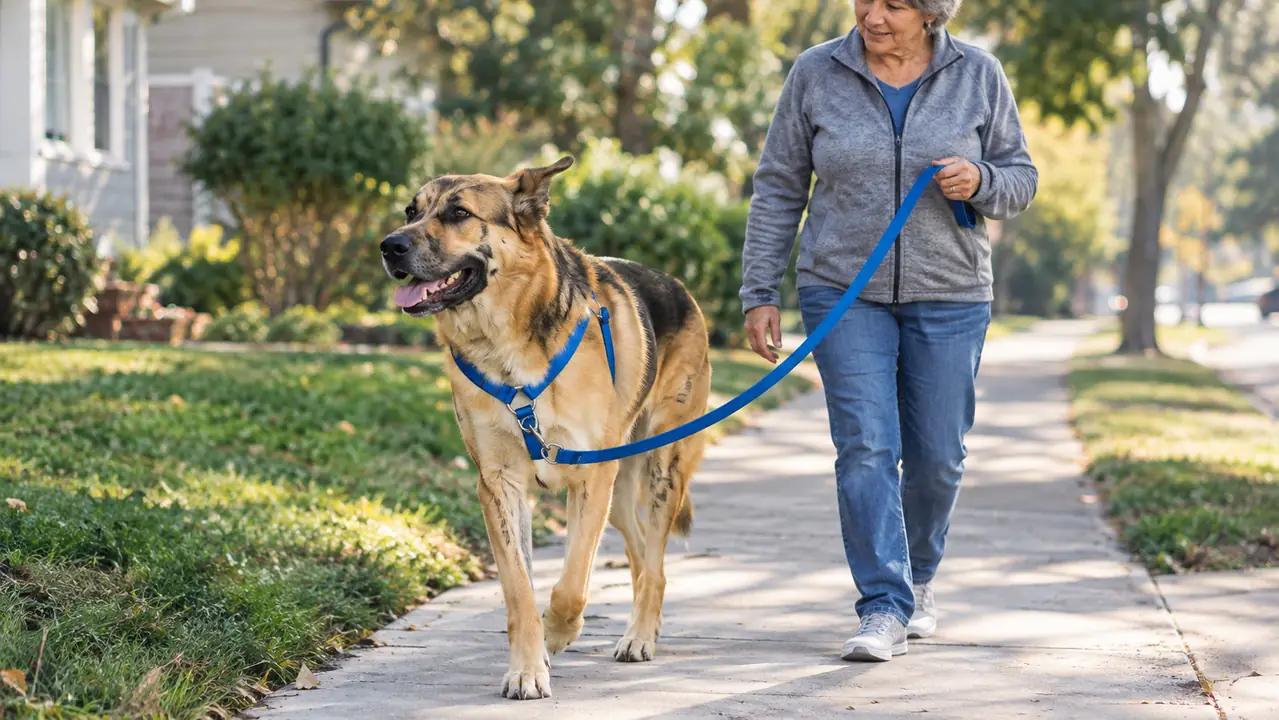
The first time I clipped the leash to the front ring of the PetSafe Easy Walk Harness, I expected a fight. Ridley, my 55-pound shepherd mix, had spent his first year and a half in a shelter, and he came home with a habit of planting his feet and pulling like he was hauling a school bus. I know that feeling from the other end of the wheel, and I did not want to spend the next ten years bracing myself on every walk. Two years later, that front clip has changed more than his leash manners. It changed how I feel about taking him out at all.
This is not a review from someone who tested the PetSafe Easy Walk for a weekend and called it a win. This is what happened over months of daily use, through Wisconsin snow, spring mud, and a few embarrassing encounters with squirrels. I kept notes, I kept the harness, and I kept walking. Here is the honest picture.
The Quick Verdict
The PetSafe Easy Walk Harness is the best everyday tool I have found for a dog that pulls, as long as you pair it with short training sessions and a proper fit. It will not fix pulling by itself, but it makes the work possible.
Amazon Check Today's Price →Stop bracing yourself on every walk
The front clip on the PetSafe Easy Walk Harness turns pulling into a gentle turn toward you, so you can actually teach loose leash walking instead of fighting it.
Amazon Check Today's Price on Amazon →How I've Used It
Ridley came to us at about 18 months old, already 55 pounds and full of opinions. Our routine is simple: two neighborhood walks a day, plus short training sessions in the kitchen and backyard. Before the PetSafe Easy Walk, a walk meant my shoulder socket doing most of the work. I tried a standard collar, a back clip harness, and a head halter that he tolerated exactly once. The back clip harness made pulling easier for him, and the head halter made him miserable. I needed something that would not hurt him and would not make me dread the front door.
Our neighborhood loop is about a mile and a quarter, and before the harness that mile was the worst part of my day. Ridley would hit the end of a flat collar leash every few steps, cough, and keep going. He would spot a squirrel across the street and lunge hard enough to pull me off the curb. Glen stopped offering to come along because the walk was really just me leaning backward and apologizing to neighbors. I had already tried a longer leash, a shorter leash, and stopping dead every time he pulled. The stopping helped a little in the house and not at all once a rabbit showed up.
So when I say the PetSafe Easy Walk made a difference, I mean it took a walk I dreaded and turned it into one I could actually use for training. That is a different claim from saying it fixed him. It gave me a dog I could hold onto long enough to teach.
I bought the PetSafe Easy Walk in the medium/large size, adjusted it according to the instructions, and spent the first week just letting Ridley wear it around the house. The harness has a front chest ring where the leash clips, and that is the whole trick. When a dog pulls forward, the front clip gently turns the front of his body back toward you. He does not get choked, he does not get yanked, he just ends up facing you instead of the horizon. The first time it happened, Ridley looked genuinely confused. By the third walk, he was checking in with me more than he ever had.
I want to be clear about one thing: the harness is a management tool, not a magic fix. I still did daily training sessions, rewarding him for walking beside me and for checking in when he saw a trigger. The PetSafe Easy Walk made those sessions possible because it stopped the constant tug of war. When your arm is not being pulled out of its socket, you have the patience to actually train.
What the Front Clip Actually Does
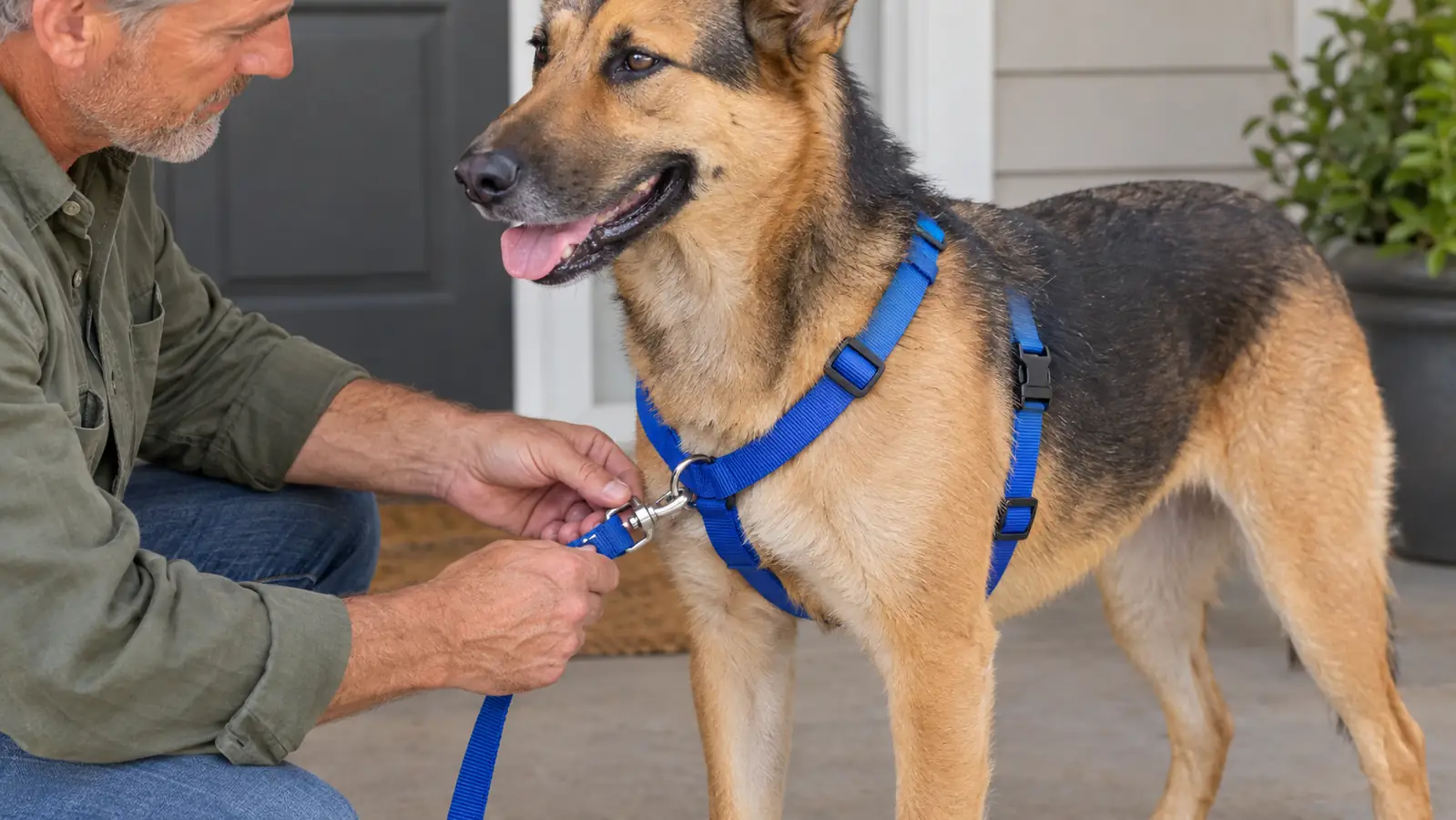
The design is simple. The leash attaches to a ring on the dog's chest, between the front legs, instead of on the back. When the dog pulls, the pressure redirects his chest toward you, which interrupts the pulling motion without putting pressure on the neck. For a dog like Ridley, who could pull hard enough to choke himself on a collar, that made a real difference. He stopped gagging, and I stopped worrying.
You can feel this physics the first day. On a collar, a 55-pound dog pulling forward puts all of that force straight into your arm and his throat. On the PetSafe Easy Walk, the same surge swings his front end toward you, so he ends up standing sideways and looking at you, wondering what happened. For a few walks Ridley would lunge, turn, look at me, and reset. That small pause was exactly the window I needed to mark the moment he stopped and reward it.
The martingale loop behind the shoulder blades is the part most people do not notice at first. It tightens gently when the dog pulls, which helps prevent the harness from slipping off and gives a subtle reminder to ease up. It is not a choke mechanism. It is a fit mechanism. I have seen cheap front clip harnesses that slide around and end up twisted, and the PetSafe Easy Walk stays put because of that loop.
One thing I learned the hard way: the front clip works best when the harness fits snugly. The first week I left it a little loose because I felt guilty about tightening it, and Ridley managed to wiggle one leg out during a walk. That was my fault, not the harness's. Once I adjusted the straps so the harness sat snugly behind his shoulders and around his chest, he never slipped out again.
The other early mistake was the leash itself. I started with a six-foot leash and too much slack hanging in a loop. Every time Ridley moved, the slack swung and the chest ring jerked a little, which seemed to annoy him more than steer him. Once I held the leash with just a soft curve in it, the harness did its job quietly. Short leash, soft hands, and a treat ready in my other hand turned out to be the whole recipe.
How It Held Up Over Two Years
I am hard on gear. Ridley is a 55-pound dog who loves mud, snow, and rolling in things I do not want to identify. The PetSafe Easy Walk has been through all of it. The nylon straps have not frayed, the buckles still click cleanly, and the stitching has held. I wash it by hand every few weeks with mild soap and water, and it looks almost new. For the price, the build quality is genuinely good.
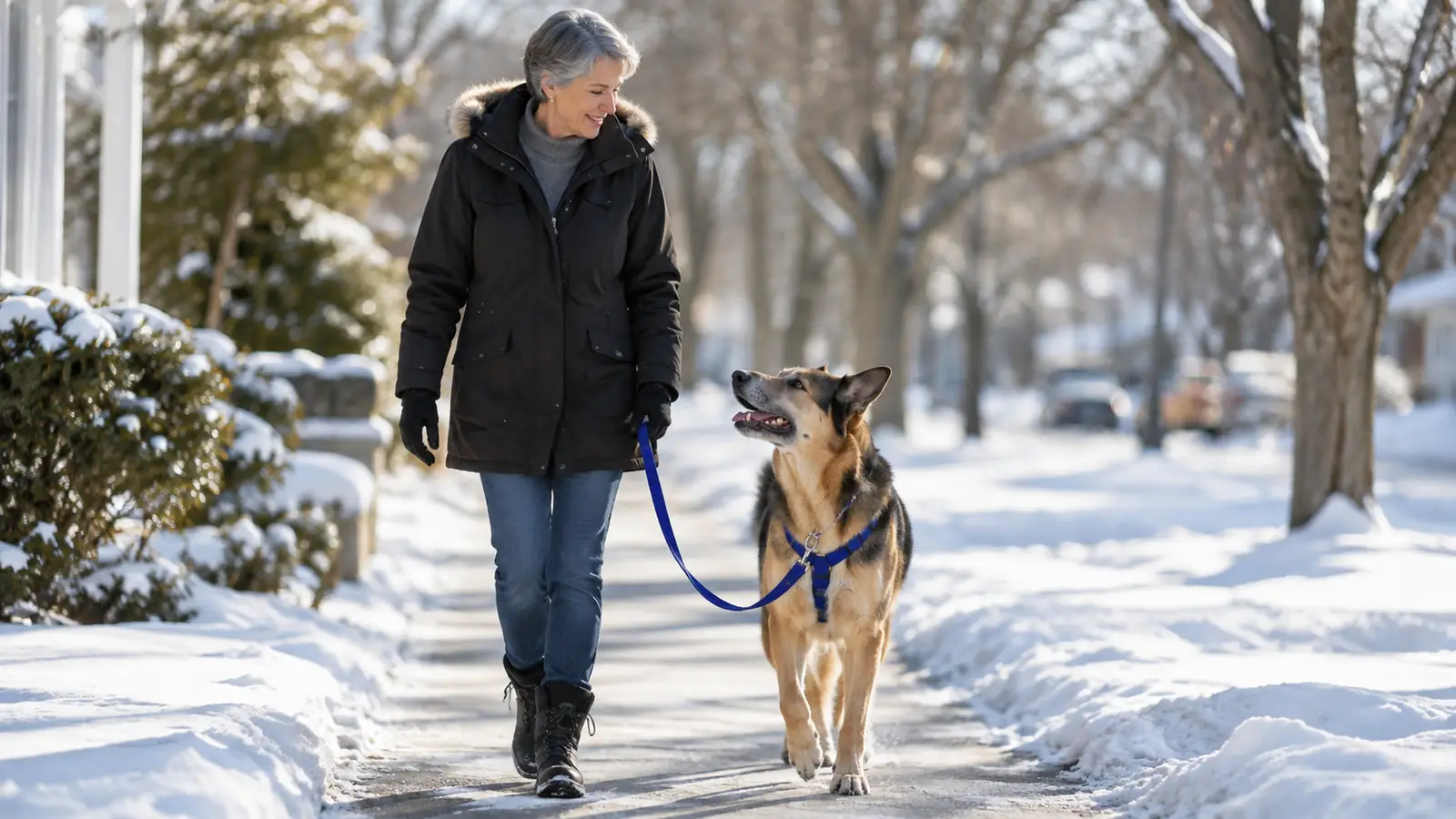
In January we had a stretch of icy mornings where the sidewalks were packed snow and salt slush. The webbing came home stiff and gray every day. I rinsed it in the laundry sink with warm water and a little dish soap, hung it over the shower rod, and it was dry by the evening walk. The buckles never froze shut, which was my biggest worry, and the plastic never cracked even when I snapped it closed with cold fingers at seven in the morning.
The one wear point I noticed is the chest ring. After about four months of daily use, the coating on the metal ring started to wear where the leash clip rubs against it. It is cosmetic, not structural. The ring itself is still solid, and I have not had any concern about it failing. If you walk on gravel or pavement a lot, you will see the same thing. It does not affect how the harness works.
I also want to talk about the pulling itself, because that is the number people actually care about. In the first month, Ridley still pulled, but the harness turned his pull into a circle instead of a straight line. By month three, he was walking beside me about half the time without any prompting. By month six, he still lunged at the occasional squirrel, but he recovered faster and came back to me on his own. The harness did not train him. The harness made it possible for me to train him, and that distinction matters.
What I can tell you is the shape of the change. The first week, nearly every block had a lunge or a hard pull. By the end of the first month we could do whole stretches of the loop on a loose leash, and the pulls that did happen were shorter and easier to interrupt. The trigger that took longest was other dogs. That is reactivity, not pulling, and no harness fixes that on its own. What the harness did was keep me steady and balanced while I worked on it, so I could turn us away calmly instead of being dragged across a yard.
The harness did not train Ridley. It made it possible for me to train him, and that distinction is the whole review.
The Fit Question, and the Sizing Reality
The PetSafe Easy Walk comes in several sizes, and getting the right one is the difference between a tool that works and a harness that frustrates you. Ridley is a 55-pound shepherd mix with a deep chest, and the medium/large fits him well. The straps adjust in two places, so you can fine tune the fit around the chest and behind the shoulders. I would measure your dog before ordering and read the sizing chart carefully. If you are between sizes, size up and tighten.
My process for fitting was slow and worth it. I measured around the widest part of Ridley's chest, right behind his front legs, and checked it against the size chart before ordering. When it arrived, I loosened every strap, put it on, and then tightened it in small steps while he ate treats off the floor. The goal is two fingers of room under each strap, the chest strap sitting across the breastbone rather than the throat, and the belly strap sitting a hand's width behind the front legs so it does not rub his armpits. I recheck all three points every couple of weeks because webbing loosens a little with use.
The one fit complaint I have is the belly strap. On a deep chested dog it sits fine, but on a dog with a barrel chest or a very short back, it can ride forward and need frequent readjustment. I have heard the same from other owners. It is not a deal breaker, but it is worth knowing before you buy. If your dog has an unusual body shape, you may need to check the strap position on every walk.
Who This Is For
The PetSafe Easy Walk is for the owner who is tired of being dragged down the sidewalk and wants a tool that works with training, not instead of it. It is for the person who wants to stop the pulling without hurting their dog, and who is willing to spend ten minutes a day rewarding the behavior they want. If you have a strong dog, a reactive dog, or a dog who simply never learned to walk on a loose leash, this harness is a solid place to start. It is also a good choice for puppies who are still learning, because it prevents the pulling habit from ever getting comfortable.
It is also a good fit for people who share a dog. Glen walks Ridley on weekends now, and the harness means he gets the same steering help I do without having to learn anything complicated. Anyone in the house can clip on and go, which keeps the walks consistent, and consistency is most of what training is.
Who Should Skip It
If you are looking for a tool that will stop pulling with zero effort, skip this one. No harness can do that, and anyone who tells you otherwise is selling something. If your dog has a respiratory condition, a neck injury, or a body shape that makes the belly strap sit wrong, talk to your vet before using any front clip harness. And if you are not willing to do the training part, the PetSafe Easy Walk will just be a slightly more complicated way to get pulled. The harness is a tool, not a trainer.
I would also skip it for a dog who spends most walks running beside a bike or jogging on a long route. The front clip is designed to slow a dog down, and that is the opposite of what you want for a running partner. A well-fitted back-clip harness is the better choice there.
What I Liked
- Front clip gently redirects pulling without pressure on the neck
- Martingale loop keeps the harness snug and secure
- Sturdy nylon and stitching held up through two years of daily use
- Two point adjustment makes it easy to fine tune the fit
- Comfortable for daily walks once sized correctly
Where It Falls Short
- Belly strap can ride forward on barrel chested or short backed dogs
- Chest ring coating wears cosmetically after a few months
- Requires a proper fit and training to actually stop pulling
Give your shoulder a break and your dog a clear signal
Months of daily use convinced me the PetSafe Easy Walk is the right first tool for a pulling dog. Pair it with short training sessions and you will both enjoy the walk again.
Amazon Check Today's Price on Amazon →