
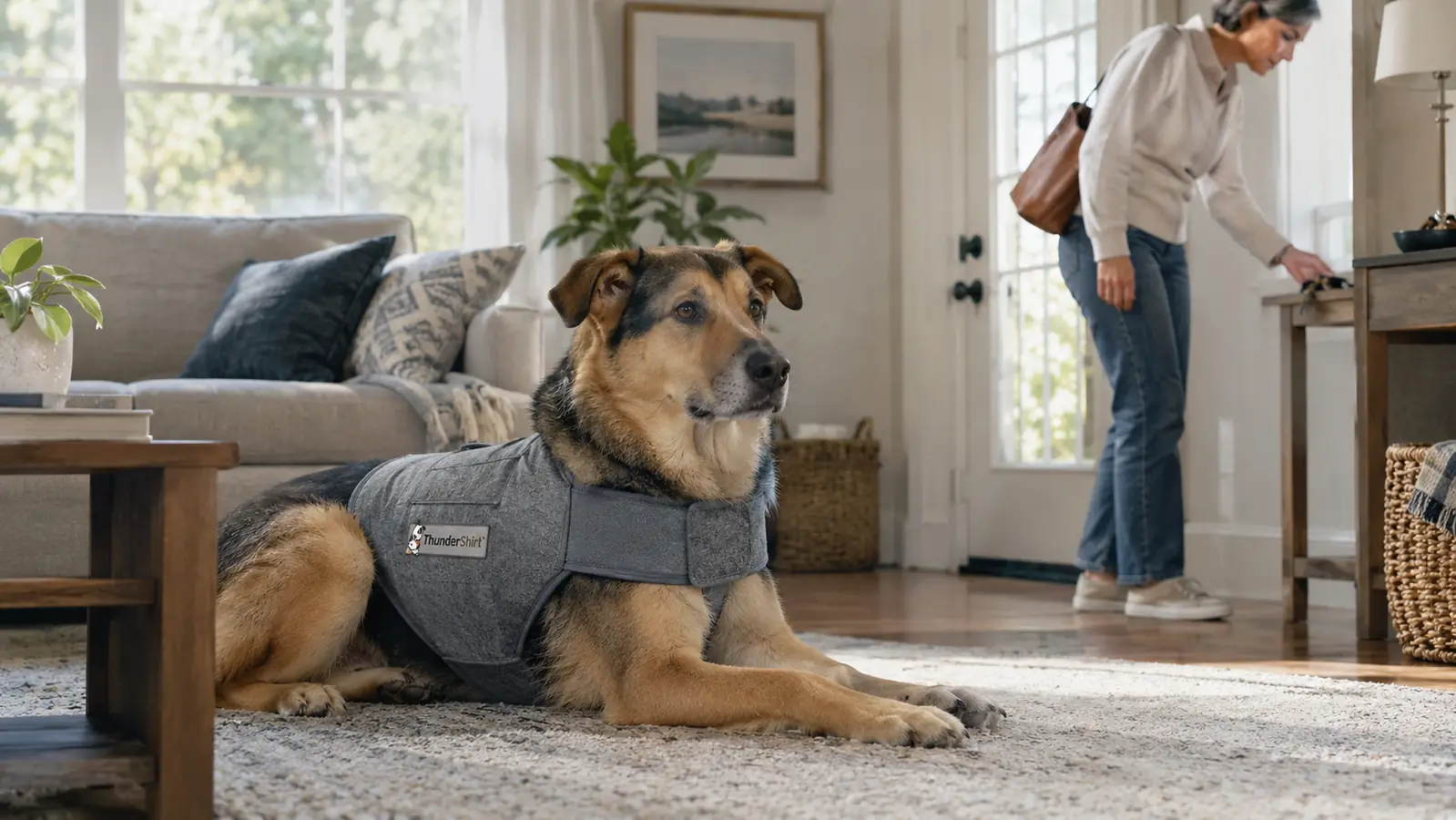
The first time I left Ridley alone for twenty minutes, I came back to a scratch mark on the inside of the front door and a neighbor knocking to ask if everything was okay. This was this past spring. Ridley was nearly four, a shepherd mix we had adopted at about 18 months, and while he had come a long way since the shelter, being left alone still undid him. In his first weeks with us he had shredded a throw pillow and chewed the corner of a baseboard. I tried leaving the radio on. I tried longer walks. I tried pretending I was leaving and then not leaving, which only confused him. What finally helped was a combination of short practice sessions and a Thundershirt calming vest that took the edge off while we did the work.
A calming vest is not a cure. I want to be clear about that before anything else, because the internet is full of people who act like a piece of fabric will fix a panic attack. It will not. What it can do is lower the intensity of the anxiety enough that your dog can actually learn. That is the whole point of this guide. You are not just strapping on a vest and hoping. You are using the vest as a tool inside a training plan, the same way I did with Ridley, and the same way I have helped friends do with their own dogs.
The vest that made our training sessions possible
The Thundershirt applies gentle, constant pressure that helps many anxious dogs settle enough to focus. It is the vest I reached for every single day while we worked on Ridley's separation anxiety.
Amazon Check Today's Price on Amazon →Step 1: Rule out the medical stuff first
Before you buy any calming product, take your dog to the vet. I know that sounds like the boring part, but it is the part that saves you from training the wrong problem. Some dogs who seem panicked when left alone actually have a medical issue. Urinary tract infections, arthritis pain, cognitive decline in older dogs, even an ear infection can make a dog restless and vocal. If your dog is destroying things or howling because he hurts, no vest in the world will help.
Ask your vet specifically about separation anxiety versus boredom versus a medical cause. The distinction matters. A bored dog needs more exercise and enrichment. A dog with true separation anxiety panics at the moment you leave, often within minutes, and cannot settle even when he is exhausted. Ridley was the second kind. He would pace, drool, and scratch at the door within five minutes of the latch clicking. I kept a little notebook on the kitchen counter and wrote down what he did each time I left, the time of day, how long I was gone, and what I found when I came back. That record is what convinced our vet it was anxiety and not something physical.
If your vet agrees it looks like separation anxiety, ask whether a calming vest is worth trying alongside a behavior plan. Most vets are fine with it because it is non-invasive and has no side effects. Some will also talk to you about medication for severe cases. There is no shame in that conversation. We had it ourselves, and knowing the option existed actually made me calmer, which helped Ridley too.
Step 2: Fit the vest properly before you ever leave
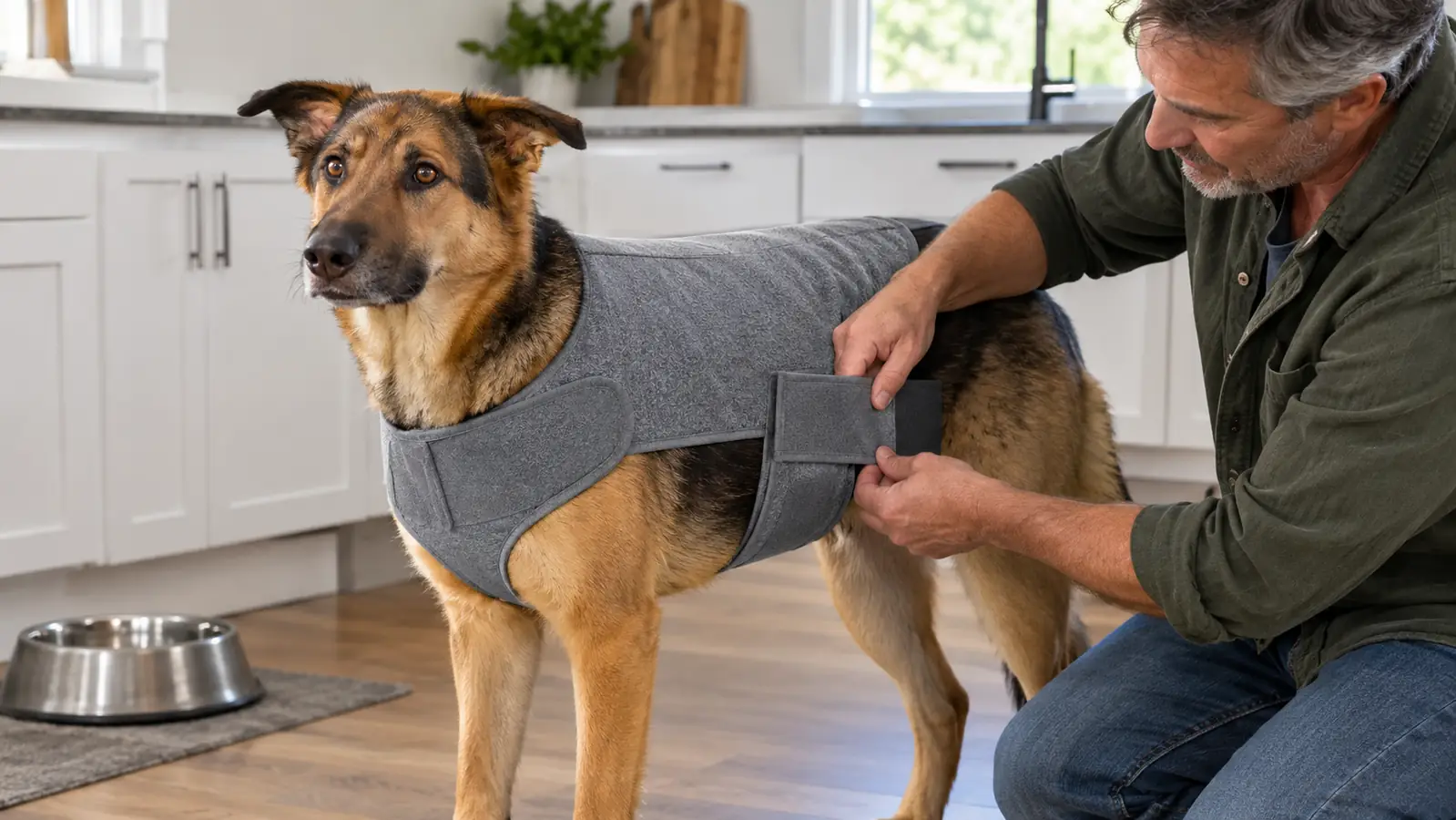
A calming vest only works if it fits. The Thundershirt works by wrapping the dog's torso with gentle, constant pressure, similar to the way a swaddle calms a baby. If it is too loose, it does nothing. If it is too tight, your dog will fight it and you will both be miserable. Measure your dog around the widest part of the ribcage, right behind the front legs, and compare that to the sizing chart on the package. I used a cloth measuring tape and wrote the number down before I ordered, because I knew I would second-guess myself once the package arrived.
Ridley is about 55 pounds with a deep chest, and the medium fits him well. When I first tried it on him, I made the mistake of fastening it while he was standing. He immediately sat down and tried to paw it off. That is normal. Do not panic. The first few times, the vest is just a weird new thing. Let your dog wear it for two minutes while you hand out treats, then take it off. Do that a few times a day for several days before you ever leave the house. With Ridley, I paired the vest with tiny pieces of boiled chicken, his favorite thing in the world, so he started to connect the vest with something good.
You want the vest snug enough that you can slide two fingers flat between the fabric and your dog's chest, but no looser. The side panels should lie flat. The front panel should sit over the chest, not up under the armpits. If your dog is between sizes, size up and use the adjustment straps. A vest that is slightly big can be cinched. A vest that is too small cannot be fixed. I checked the fit again after the first few wears, because the fabric relaxed a little and I needed to tighten one side by about an inch.
Step 3: Build a calm leaving routine
Dogs with separation anxiety are often triggered by the little things we do before we leave. Picking up keys. Putting on shoes. Grabbing a coat. Over time, those cues become a warning signal, and the dog starts panicking before the door even opens. The fix is to make those cues boring, and to pair them with something your dog loves.
Start by picking up your keys and then sitting back down. Do not leave. Repeat it until your dog stops reacting. Then pick up the keys, put on your shoes, and walk to the kitchen to make tea. The goal is to break the association between the cue and the departure. Do this for a few days, in short sessions, and you will start to see your dog's shoulders drop when you grab the keys. I remember the exact day Ridley stopped following me to the door when I picked up my keys. It was a Tuesday morning, about a week into the boring-cue practice, and he just stayed on his bed. I almost cried into my tea.
This is where the vest earns its keep. Put the Thundershirt on your dog at the start of the routine, before you pick up the keys. The pressure helps many dogs stay in a calmer state while you do the boring-cue practice. It is not magic. It is just enough of an edge that your dog can notice the keys are not actually a disaster.
Step 4: Practice departures in tiny increments
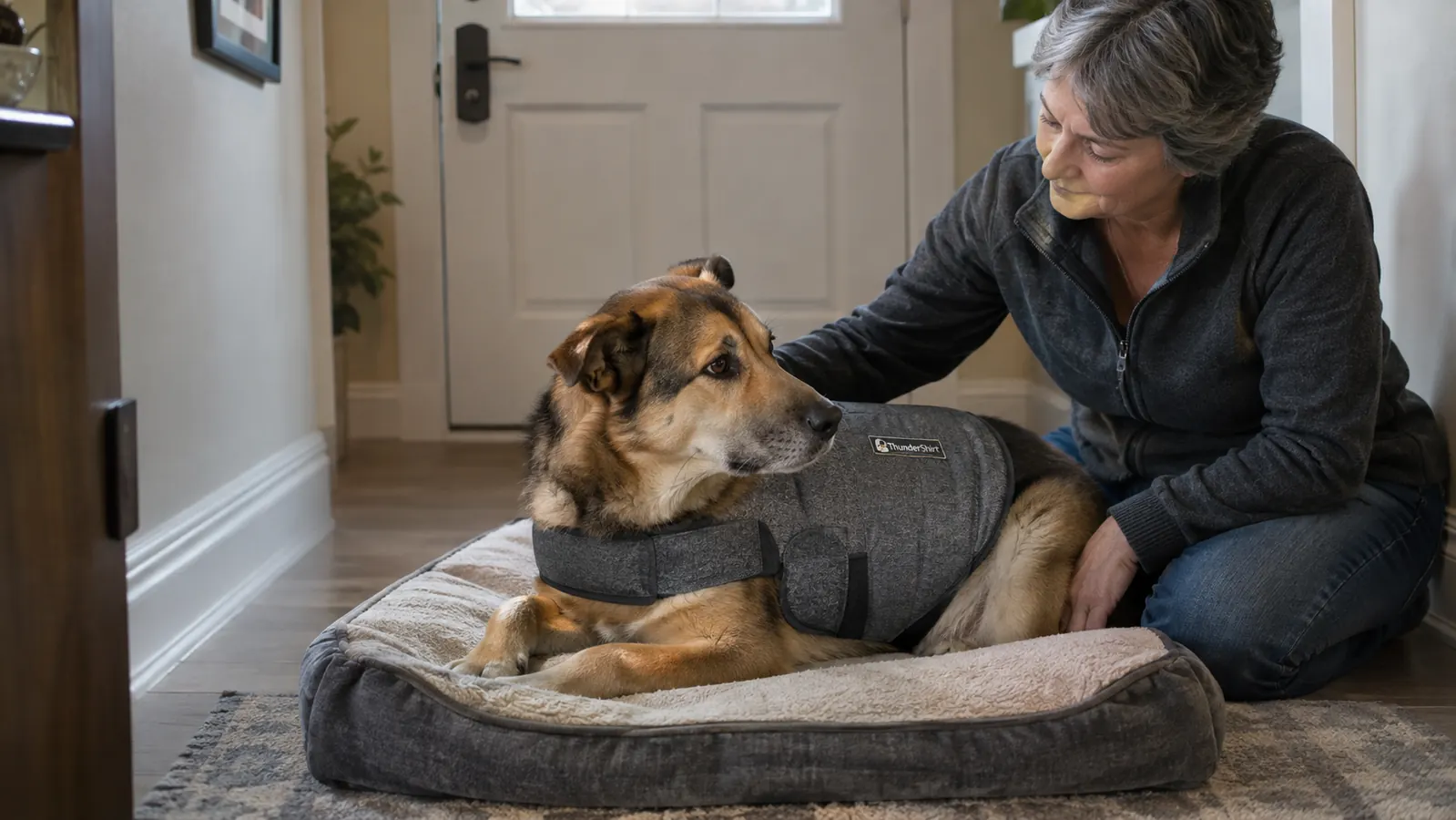
The core of separation anxiety training is leaving for such a short time that your dog never reaches the panic point. For Ridley, that was about thirty seconds at first. I would put on the vest, do the routine, step outside, close the door, count to thirty, and come back in like it was no big deal. No dramatic hello. No sad goodbye. Just a normal return. The first time I did it, I stood on the porch with my back to the door and counted out loud so I would not cheat.
Then I would do a minute. Then two. Then five. The key is to increase the time slowly and to stay under the threshold where your dog starts to panic. If you come back to destruction, you went too long. Back up to the last duration that worked and stay there for several days. This is not a race. It took Ridley about six weeks to get to an hour, and several more months before he could handle a full workday. I kept a chart on the fridge with the date and the longest time he had managed, and I crossed off each new record with a red pen.
During this phase, the vest goes on every time you practice. You want the dog to associate the vest with the calm, boring routine, not with the panic. Some trainers call this a safety signal. The vest becomes the thing that says, in effect, you are okay, I will be back. Over time, many dogs start to settle faster the moment the vest goes on. By the third week, Ridley would walk over to the couch and lie down as soon as I fastened the side panels, before I had even picked up my keys.
Step 5: Add the vest to real departures, then fade it out
Once your dog can handle thirty minutes alone without panic, you can start using the vest for real departures. Keep the routine identical. Vest on, boring cues, short goodbye, leave. Come back and take the vest off quietly. Do not make a fuss. The more normal the whole thing feels, the more normal it becomes. My first real test was a trip to the grocery store that took about forty-five minutes. I came home expecting the worst and found Ridley asleep on the couch, the vest still on, not a single thing chewed.
Here is the part most people do not expect. After a few months of consistent work, you may not need the vest every single time. Ridley now wears his only on days when I know he is already on edge, like after a loud thunderstorm or a visit from the grandkids. The training did the heavy lifting. The vest became a backup, not a crutch. I still keep it on the hook by the back door, and I still put it on him before I leave for a long appointment, because why make him work harder than he has to.
Some dogs will need the vest for years. That is fine. There is no rule that says a dog has to be completely independent. If the vest keeps your dog calm and keeps your house intact, use it. You are not failing. You are managing a condition the same way you would manage any other health issue, with the tools that work.
What Else Helps
The vest works best as part of a bigger plan. Exercise matters, but not the way most people think. A tired dog is not automatically a calm dog. Ridley could be exhausted from a two-mile walk and still panic the second I left. What helped more was mental enrichment: a frozen Kong, a snuffle mat, a puzzle toy. Giving his brain a job for the first twenty minutes after I left made a real difference. I started stuffing a Kong with plain yogurt and a few kibble pieces, freezing it overnight, and handing it to him right before I walked out the door.
I also stopped making goodbyes and hellos into events. When I leave, I just leave. When I come back, I greet him only once he is calm. That single change removed a lot of the emotional charge around the front door. And I kept a camera pointed at his bed so I could see what he actually did while I was gone. Watching him settle after ten minutes instead of pacing the whole time was the proof I needed that the plan was working. It also showed me that the worst of the panic happened in the first few minutes, which is exactly when the vest and the Kong were doing their jobs.
The vest did not fix Ridley's anxiety. It lowered it enough that he could finally learn that I always come back. That is the whole job.
Start with the vest, then do the work
The Thundershirt is the tool that made Ridley's training possible. Pair it with short practice sessions and a boring routine, and you have a real plan for separation anxiety.
Amazon Check Today's Price on Amazon →