
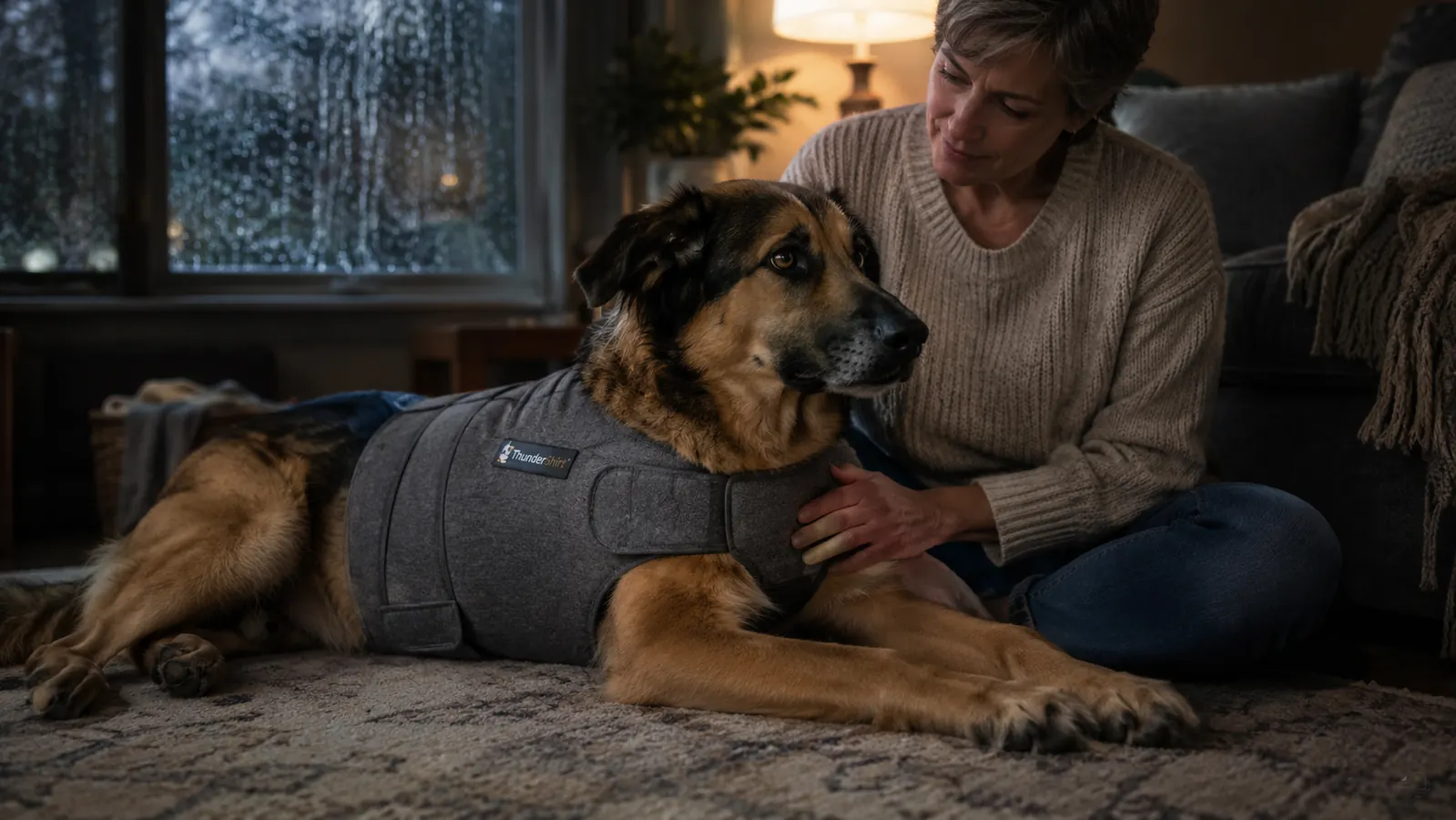
The first time Ridley heard thunder, he was about two years old and he reacted like the sky was falling on him personally. He paced from the front door to the back door, claws clicking on the hardwood, until his paws were raw. He drooled. He tried to climb into my lap, all 55 pounds of shepherd mix, and when I wouldn't let him, he wedged himself behind the toilet in the hall bathroom. That was the night I started researching calming vests, and the ThunderShirt kept coming up in every search.
I'll be honest: I was skeptical. A piece of fabric with a strap seemed too simple for a dog that panicked at the first rumble of a storm. But after six months of using it through thunderstorm season, fireworks season, and a few unexpected vet visits, I have a much clearer picture of what it does, what it doesn't do, and which dogs it actually helps.
The Quick Verdict
The ThunderShirt is the most reliable management tool I own for storm anxiety. It won't replace training, and it won't work for every dog, but for Ridley it turns a full-blown panic into something we can both get through.
Amazon Check Today's Price →Storm season is coming. Get the vest that calms without medication.
The ThunderShirt uses gentle, constant pressure to help anxious dogs settle during storms, fireworks, and travel. It's the first thing I reach for when the barometer drops.
Amazon Check Today's Price on Amazon →How I've Used It
Ridley came to us from a shelter at about 18 months old, and his anxiety showed up in a dozen different ways. He pulled on the leash, lunged at other dogs, jumped on visitors, and panicked when left alone. The thunder was the worst of it, though. A storm would hit and he would be inconsolable for hours, sometimes long after the sky cleared.
His storm fear was the worst of it. He would pace from room to room, pant until his tongue was long and flat, and finally squeeze himself between the toilet and the bathtub. When fireworks started around the Fourth of July, he would not eat for most of the evening. Our vet checked him over, ruled out anything medical, and suggested we try a pressure wrap alongside some simple training. That is how the ThunderShirt came into our house.
I bought the ThunderShirt in early spring, before the first big storm of the season. My plan was simple: put it on Ridley at the first sign of anxiety, leave it on for twenty to thirty minutes, and pair it with the training we were already doing. I wanted to see if the pressure wrap would take the edge off enough for him to actually learn something during a storm instead of just surviving it.
I did not wait for a storm to put it on him. For the first week, I put it on for five minutes at dinnertime, gave him his food, and took it off again. Then ten minutes while he chewed a favorite toy. By the time the first spring storm rolled in, he wagged when he saw the vest come out of the closet, which was exactly the point.
Over the next six months, I used it for thunderstorms, Fourth of July fireworks, a trip to the vet after he ate something he shouldn't have, and a few anxious evenings when the neighbor's kids were setting off firecrackers. I also used it during our regular training sessions, mostly to see if it helped him focus. The results were consistent enough that I can now predict how he'll respond: the vest doesn't make him calm, but it makes him reachable.
What the Pressure Wrap Actually Does
The ThunderShirt works on a simple principle: gentle, constant pressure across the torso, similar to swaddling a baby or using a weighted blanket. The idea is that this pressure has a calming effect on the nervous system, which is why the same approach shows up in products for people with anxiety too.
In Ridley's case, the effect was noticeable within about ten minutes of putting it on. His panting slowed. He stopped pacing and sat down, which for him is a big deal during a storm. He still whined and he still wanted to be near me, but he wasn't trying to dig through the drywall anymore. That may not sound like much, but when you've watched a dog panic for hours, a dog that sits down and whines is a huge improvement.
The change was not dramatic, and I want to be careful about that. He still noticed the thunder. His ears still went back. But instead of pacing and panting for an hour, he would lie down on his bed near me, sigh, and stay there. His breathing slowed. A couple of times he even fell asleep through the tail end of a storm, which had never happened before.
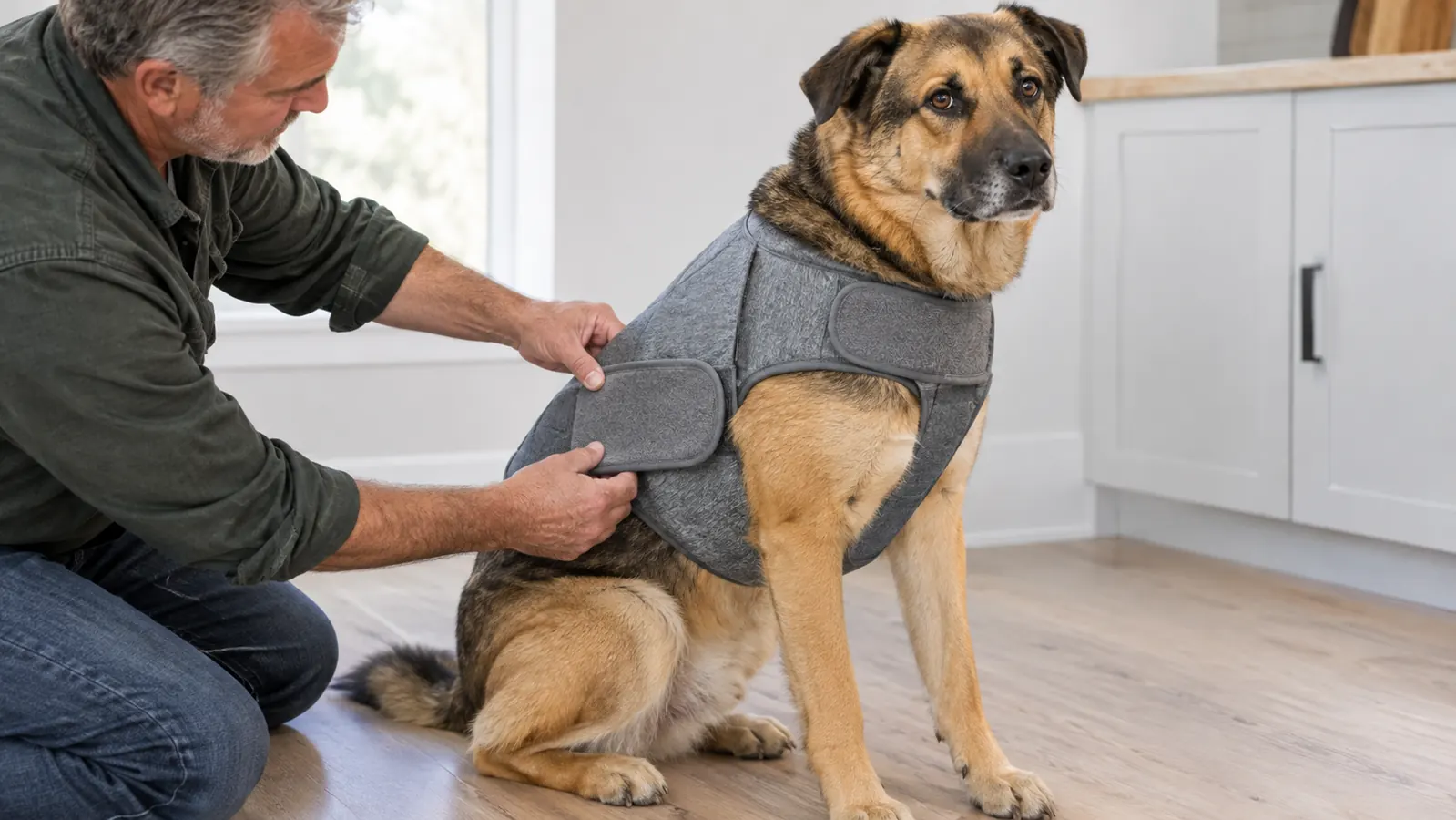
The vest has two adjustable straps, one around the chest and one around the belly. Getting the fit right matters. Too loose and it does nothing. Too tight and it seems to bother him. I found the sweet spot by starting with the straps snug but not restrictive, then watching his body language. When he relaxed, I knew I had it right.
Getting the snugness right took a few tries. Too loose and it does nothing. Too tight and he walked stiffly. The sweet spot was snug like a good hug, where I could slide two fingers under the panels easily. I check it each time I put it on, because a 55-pound dog breathing hard during a storm changes shape a little.
How It Held Up Over Six Months
I've washed the ThunderShirt four times in six months, mostly because Ridley drools when he's anxious and the vest gets soaked. It comes out of the wash looking the same as it did the day I bought it. The Velcro still holds, the straps haven't stretched, and the fabric hasn't pilled. For a piece of gear that gets worn maybe three times a week during storm season, that's better durability than I expected.
I wash it on the gentle cycle in cold water and let it air dry over a chair. I close the hook and loop panels before washing so they do not grab the other laundry or collect fur. After all those washes, the fabric is still soft, the stitching is intact, and the panels still grip firmly.
The fit has also held up. Ridley is about 55 pounds and the medium size fits him well. The vest doesn't shift around when he moves, and it doesn't ride up when he lies down. I can put it on him by myself in about thirty seconds, which matters when a storm rolls in fast and he's already starting to pace.
I also like how easy it is to put on a nervous dog. The vest drapes over his back, one panel wraps under his chest, and the other folds over it. It takes about thirty seconds, even when he is already pacing, and there is nothing to pull over his head.
One thing I learned the hard way: the ThunderShirt is not a substitute for training. During the first few weeks, I made the mistake of putting it on Ridley and expecting him to just get over it. That's not how it works. The vest is a management tool. It lowers the intensity of the anxiety so the training can actually happen. The real progress came when I paired the vest with short, consistent desensitization sessions, playing storm sounds at low volume while he was wearing it and rewarding him for staying calm.
So alongside the vest, we built a storm routine. When the forecast showed thunder, I closed the curtains, turned on a fan for steady background noise, put the ThunderShirt on early, and set Ridley up on his bed with a chew. When thunder cracked, I tossed him a treat. Over the season, the routine itself became calming, and the vest was one part of it.
The ThunderShirt doesn't make Ridley calm. It makes him reachable. That's the difference between a tool that works and a cure that doesn't exist.
Where It Shines and Where It Falls Short
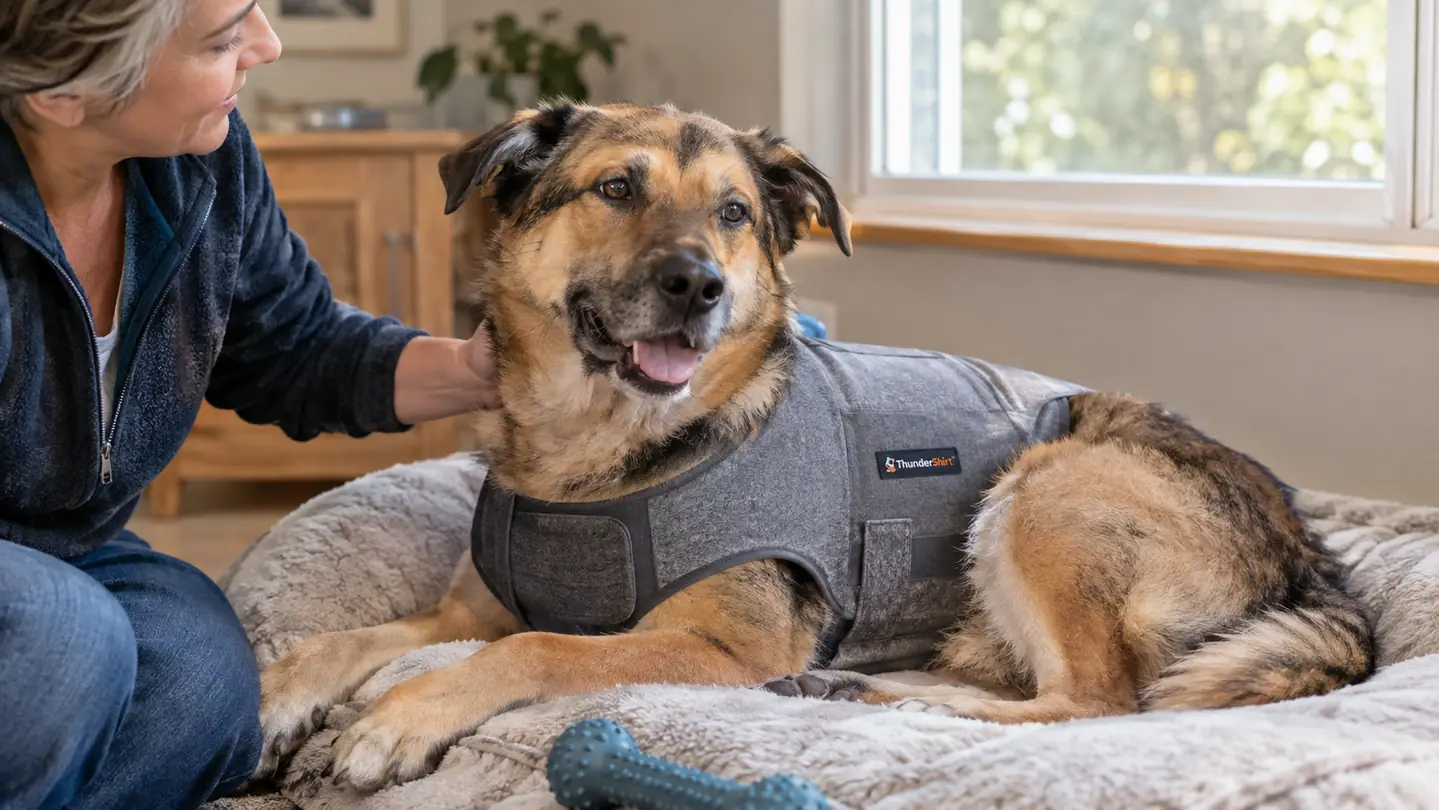
The ThunderShirt shines in situations where the anxiety is predictable and time-limited. Thunderstorms, fireworks, vet visits, car rides, visitors coming over. In those situations, I can put the vest on ahead of time and it genuinely helps. Ridley still knows a storm is coming, but he doesn't spiral the way he used to.
Car rides were a nice surprise. Ridley used to drool and shake on the way to the vet. With the vest on and a towel on the back seat, he started lying down within a few minutes of leaving the driveway. It did not make him love the car, but it made the twenty-minute drive bearable for both of us.
It falls short in two situations. The first is separation anxiety. When Ridley panics about being left alone, the vest doesn't do much. The pressure seems to help with noise and environmental triggers, but not with the deep distress of being separated from his people. The second is when he's already in full panic mode. If I wait too long to put it on, the vest is less effective. It's much better as a preventive measure than as a rescue device.
The second is leash reactivity. I tried it on a few walks, hoping it would take the edge off his barking at other dogs, and it made no real difference. Reactivity on walks is something we worked on through distance, timing and rewards, not a vest.
I also want to be honest about what it's not. It's not a sedative. It won't knock a dog out. It won't work for every dog, and it won't work every time. But for a dog like Ridley, whose anxiety is real but not constant, it's the difference between a bad night and a manageable one.
Who This Is For
The ThunderShirt is for owners who want a drug-free first line of defense against situational anxiety. If your dog panics during thunderstorms, hides during fireworks, or gets worked up in the car, this is worth trying. It's also for owners who are already doing training and need something to take the edge off while they work on the root cause.
It's especially good for dogs that respond to gentle pressure. Some dogs naturally lean into you when they're scared, and those are the dogs that tend to get the most benefit from a pressure wrap. If your dog is the type to press against your legs during a storm, the ThunderShirt is probably going to help.
A simple test: if your dog leans into you during a storm, presses against your legs, or likes to be wrapped in a blanket, there is a good chance a pressure vest will feel comforting to them. Ridley is a leaner, and that was the first clue it might help.
Who Should Skip It
Skip the ThunderShirt if your dog's anxiety is severe enough that they're destructive, self-harming, or completely unreachable during an episode. In those cases, you need a veterinarian's help, and possibly medication. A pressure wrap is not going to stop a dog that's chewing through a door.
Skip it if your dog hates wearing clothes. Some dogs never get used to the feeling of a vest, and forcing it will only add to their stress. And skip it if you're looking for a one-and-done fix. The ThunderShirt is a tool, not a cure. It works best as part of a bigger plan that includes training, management, and sometimes professional help.
And never leave it on for hours at a time or in hot weather. It is meant to be worn during the stressful event and a little before, then taken off. I set a timer on my phone so I do not forget it on him after a storm passes.
What I Liked
- Noticeable calming effect within about ten minutes for storms and fireworks
- Drug-free and quick to put on when you see trouble coming
- Soft fabric that has stayed in good shape through regular washing
- Adjustable panels make a snug, comfortable fit easy
- Helps with car rides and other predictable stress
Where It Falls Short
- Did not help with separation anxiety or leash reactivity
- Only works while it is on, so training still matters
- Some dogs never accept wearing anything
- Needs to come off after the stressful event, not stay on for hours
Give your dog a calmer storm season.
The ThunderShirt is the tool I reach for first, and it's helped Ridley get through storms he used to panic through. See today's price and read thousands of owner reviews.
Amazon Check Today's Price on Amazon →