
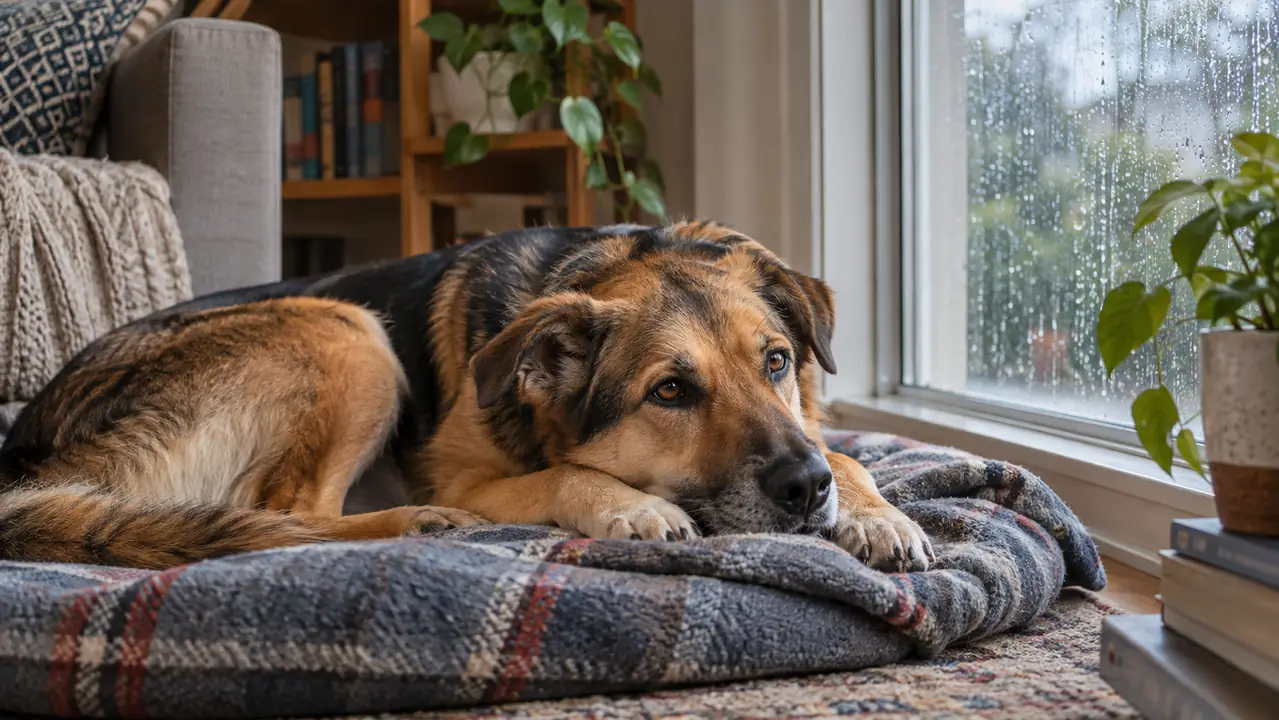
The first time Ridley hid in the bathtub, I thought it was a fluke. This was months before I had ever heard of the ThunderShirt. The second time, I started to worry. By the third storm, I was sitting on the bathroom floor at 2 a.m. with a 55-pound shepherd mix pressed against my legs, his whole body trembling, while Glen slept through it all in the bedroom. That was the night I admitted to myself that we had a real problem, and that love alone was not going to fix it.
Ridley came to us from the shelter at about 18 months old, and he brought a lot of baggage with him. He pulled on the leash, lunged at other dogs, jumped on visitors, and panicked when we left him alone. We worked through most of that with short daily training sessions in the kitchen and the backyard, and I was proud of how far he had come. But storms were different. No amount of treats or cheerful chatter could reach him once the thunder started rolling.
I tried the things everyone suggested. I closed the curtains, turned up the TV, gave him a frozen Kong, and tried to act like nothing was happening. Some of it helped a little. None of it helped enough. The moment the first crack of thunder hit, he would be gone, wedged behind the toilet like the bathtub was a bomb shelter and he was the only one who knew it.
A friend whose dog had the same problem told me about the Thundershirt. She described it as a snug pressure wrap that hugs a dog the way a swaddle calms a baby, and she said it had turned her own dog's storm nights around. I was skeptical. It sounded too simple to work, and I had already spent money on gadgets that promised more than they delivered. But I was also tired, and Ridley was miserable, and I was willing to try almost anything that did not involve medication I was not comfortable asking for yet.
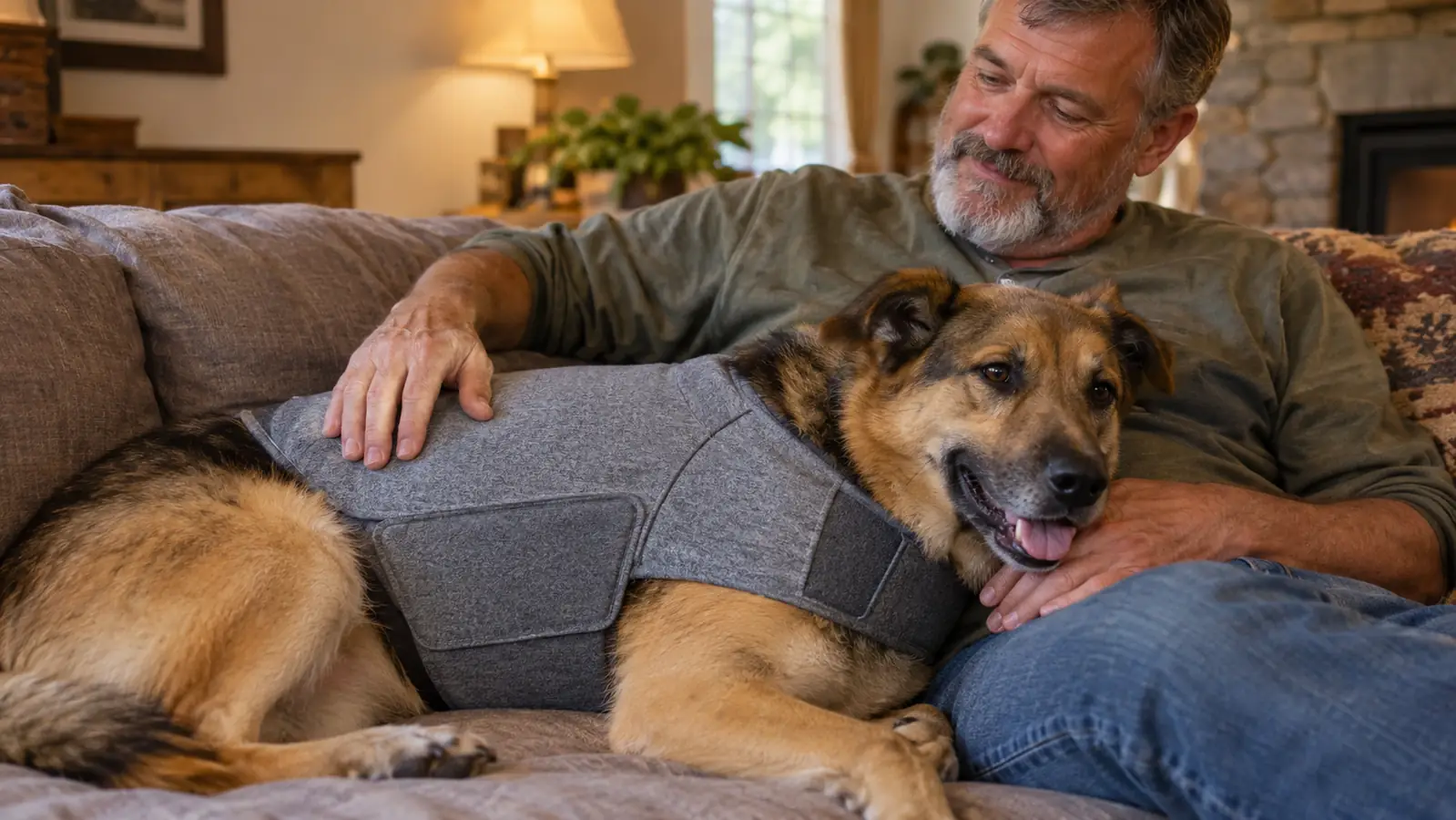
The first storm with the Thundershirt, Ridley stayed on his bed for the whole night. He did not hide. He did not shake. He just slept, and so did I.
The wrap that helped Ridley sleep through his first storm in months
The Thundershirt applies steady, gentle pressure that many dogs find deeply calming. It is not a cure, and it will not replace training, but for us it turned storm nights from a battle into a manageable routine.
Amazon Check Today's Price on Amazon →The first time I put the Thundershirt on Ridley, he stood very still for about thirty seconds, then let out a long sigh and lay down. I will not pretend it was magic. He still perked up at the first rumble of thunder, and he still wanted to be near me. But he did not bolt for the bathroom. He stayed on his bed in the living room, and when the storm passed, he was still there, relaxed enough to accept a treat and a scratch behind the ears.
We used it consistently for the rest of storm season. I would put it on him about twenty minutes before a storm was forecast to arrive, pair it with a chew and a quiet corner, and let the pressure do its work. Some nights were better than others. On the worst nights, he still wanted to lean against my leg, and I let him. The Thundershirt did not make him a different dog. It just took the edge off the panic so that the training we had already done could actually reach him.
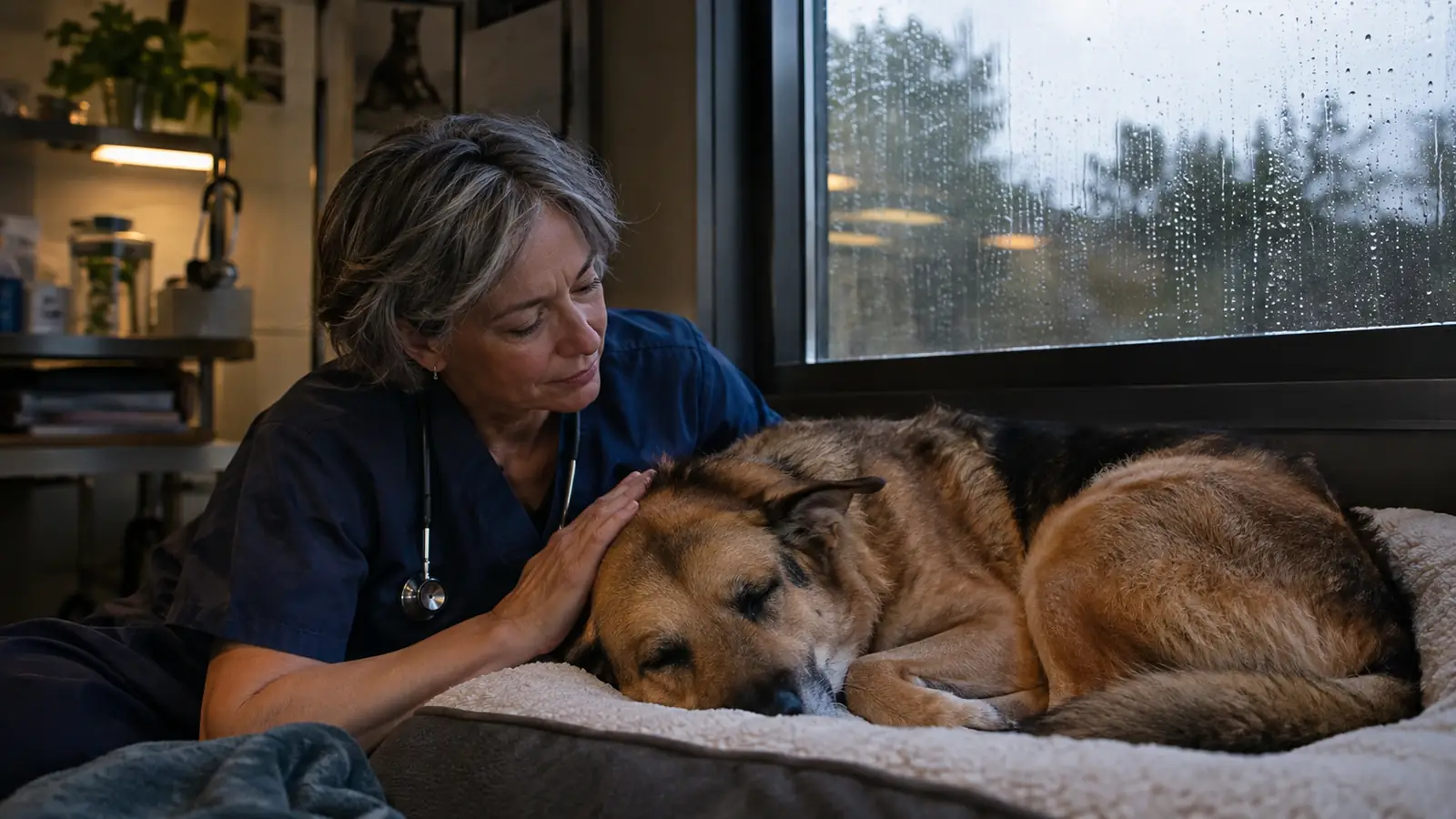
I want to be honest about what the Thundershirt is and is not. It is a management tool, not a training program. It helped Ridley feel calmer during storms, but it did not teach him to be calm on his own, and I did not expect it to. We kept up our short daily sessions, we rewarded every moment of relaxed behavior, and we gave him plenty of exercise on the two neighborhood walks we take every day. The wrap made those efforts more effective, because a dog who is not drowning in panic can actually learn.
If you are reading this because your dog is hiding in the bathtub right now, I want you to know a few things. First, you are not alone, and neither is your dog. Second, there is no shame in using a tool that helps. Third, the tool works best when it is part of a bigger plan that includes training, routine, and a whole lot of patience. The Thundershirt is not a replacement for any of that. It is simply a way to make the hard nights a little easier for both of you.
What I'd Tell You If We Were Sitting at My Kitchen Table
If you were sitting at my kitchen table in Sun Prairie with a cup of coffee, here is what I would say. Start with the basics: make sure your dog has a safe space, get plenty of exercise, and keep your training sessions short and positive. Then, if storms are still a problem, try the Thundershirt. Put it on before the storm hits, stay calm yourself, and do not expect perfection. Some dogs take to it right away. Others need a few tries. Ridley needed about a week before he stopped looking at the wrap like it was a strange new costume.
I would also tell you to be patient with yourself. I made plenty of mistakes when Ridley first came home. I pushed him too hard, expected too much too fast, and once I even got frustrated enough to raise my voice, which I regretted immediately. What worked was slowing down, watching him, and letting him show me what he needed. The Thundershirt was part of that. It gave him enough calm to show me that he could handle a storm, and that changed how I saw him, and how he saw himself.
Give your dog a calmer storm season
The Thundershirt is a simple, drug-free option worth trying if your dog struggles with thunder, fireworks, or other loud noises. Pair it with training and patience, and you might both get some sleep.
Amazon Check Today's Price on Amazon →