
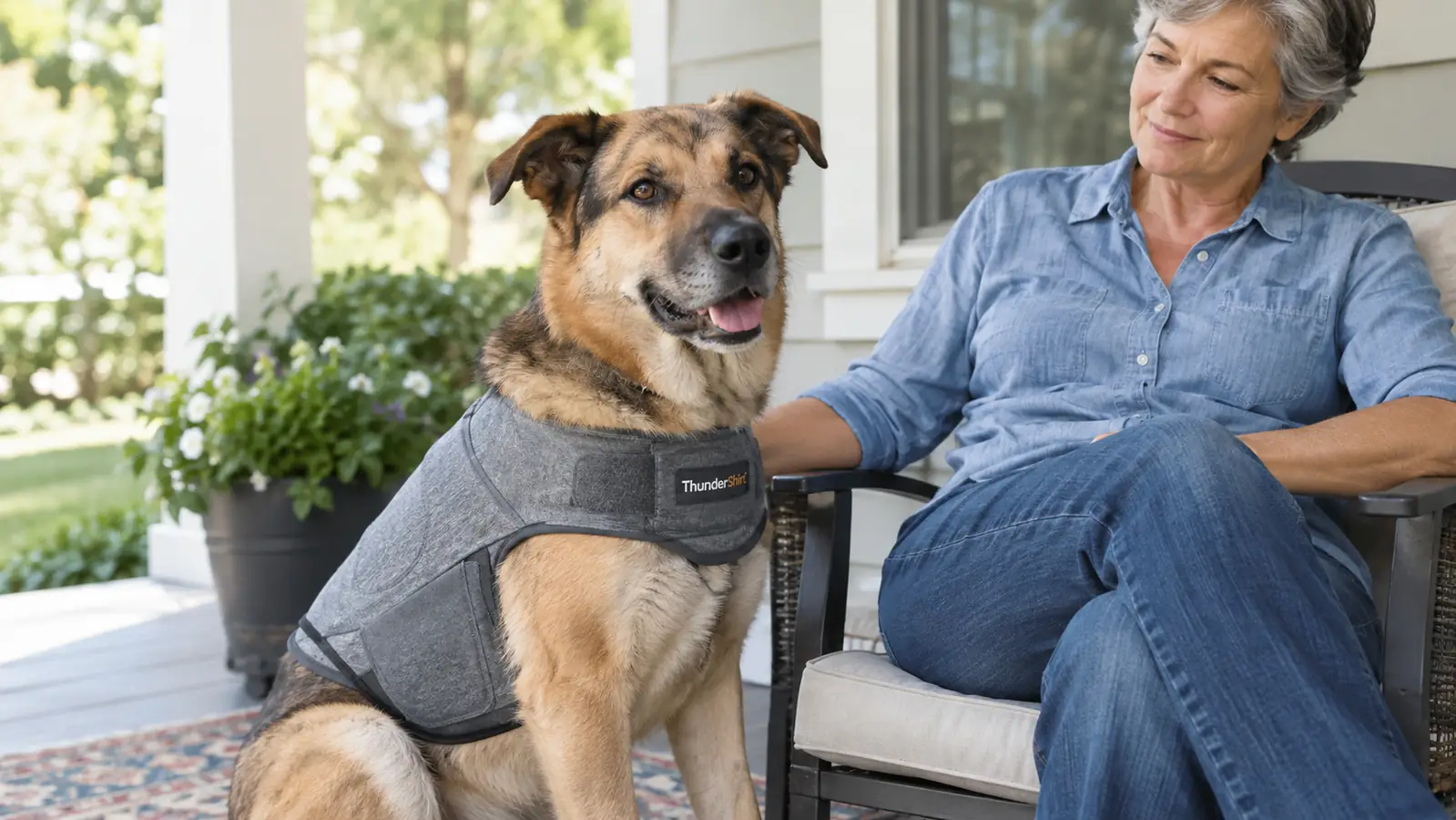
I bought the ThunderShirt for Ridley, my 4-year-old shepherd mix, about six months ago. He came to us from a shelter at roughly 18 months, and by the time he settled in we knew exactly what we were dealing with: he pulled hard on the leash, barked and lunged at other dogs, jumped on visitors, and panicked when left alone. I had read every forum thread and watched every video, and the ThunderShirt kept coming up. Some people swore it was the only thing that got their dog through a storm. Others said it did nothing at all. I wanted to know which camp we would land in, so I tried it myself, kept notes for six months, and now I can tell you exactly who this product helps and who it doesn't.
The Quick Verdict
The ThunderShirt is a genuinely useful management tool for mild to moderate anxiety, but it is not a cure. It took the edge off Ridley's storm panic and helped him settle in the car, and it did nothing for his leash reactivity. That work happened in training.
Amazon Check Today's Price →The pressure wrap that took the edge off Ridley's storm panic
If your dog paces, shakes, or panics during storms or car rides, the ThunderShirt is worth trying. It is not a training program and it will not fix reactivity, but for mild to moderate anxiety it can make the hard moments more manageable.
Amazon Check Today's Price on Amazon →How I've Used It
I want to be clear about one thing before I go any further: I am not a certified trainer. I am a retired school bus driver in Sun Prairie, Wisconsin, who spent two years turning a reactive rescue into a dog I can take anywhere. I kept notes the whole way, and this review is based on six months of daily and near-daily use of the ThunderShirt with Ridley, plus a lot of conversations with our vet and with owners who tried it on their own dogs.
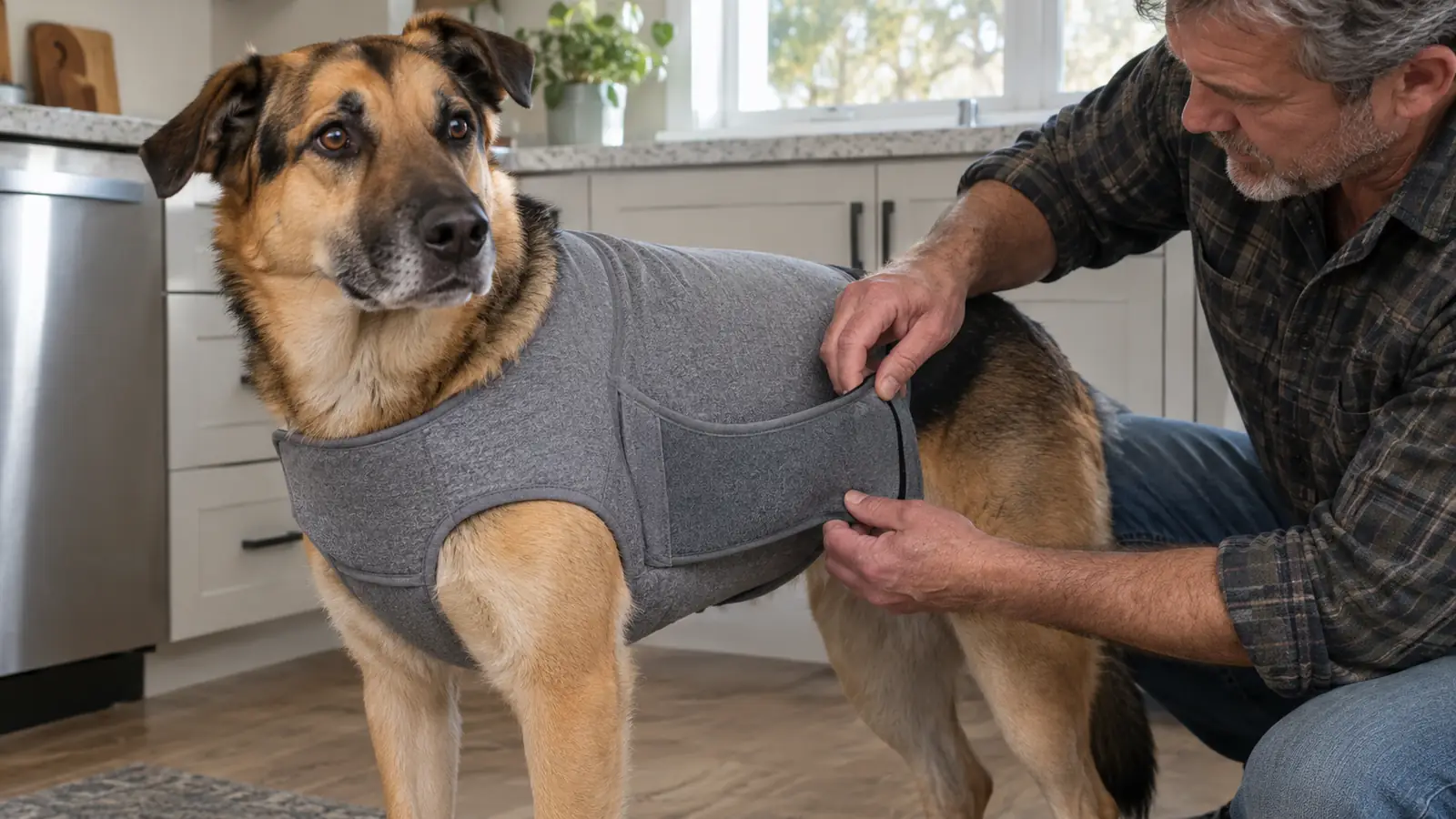
The ThunderShirt is a snug, wrap-style vest that applies gentle, constant pressure across the dog's torso. The idea is that this pressure has a calming effect, similar to the way a firm hug can settle a person. The company calls it a calming anxiety vest, and it comes in sizes from extra small to extra large. Ridley is about 55 pounds, and the medium fits him well. The vest wraps around his chest and belly and fastens with panels on each side, so it stays put even when he moves around.
I used it in four situations: thunderstorms, car rides, visits from guests, and our daily walks. I also tried it during his alone-time panic, which was the hardest problem we faced. I kept a simple log: date, situation, whether he wore the vest, and a one-to-ten score for how calm he seemed. That log is where everything I am about to tell you comes from.
What the ThunderShirt Actually Did for Ridley
The clearest win was thunderstorms. Before the vest, Ridley would pace from window to window, whine, and press his body against me. With the ThunderShirt on, he still knew a storm was coming, but he would settle on his bed after about ten minutes instead of pacing for the whole hour. It did not make him oblivious. It made the storm bearable. That alone was worth the purchase for us.
Car rides were the second clear win. Ridley used to drool and tremble on any drive longer than ten minutes. With the vest on, the trembling stopped and the drooling dropped off a lot. He still did not love the car, but he could lie down and rest instead of shaking the whole way. Our vet said the pressure likely gave him something to focus on besides the motion and the noise.
The ThunderShirt did not make Ridley oblivious to storms. It made them bearable, and that was worth the purchase on its own.
Visitors were a partial win. Ridley still barked when someone knocked, but with the vest on he recovered faster. He would bark for a few seconds, then go sniff the guest instead of staying wound up for ten minutes. It was not a fix for his greeting behavior, but it shortened the worst part of it.
The daily walks were where the ThunderShirt let me down. Ridley's leash reactivity, the barking and lunging at other dogs, did not change at all with the vest on. I tried it for three weeks straight on every walk, and the log shows the same scores with the vest as without. That was disappointing, but it taught me something important: the ThunderShirt is not a training tool. It is a management tool. It can lower the background anxiety that makes training harder, but it will not teach a dog a new behavior.
What Nobody Tells You Before You Buy
The first thing nobody tells you is that the ThunderShirt works best when you put it on before the anxiety starts. If you wait until the thunder is already crashing or the guest is already at the door, you have missed the window. I learned to watch for Ridley's early signs, the lip licking, the tucked tail, the sudden alertness, and put the vest on at the first hint. That made a real difference. The vest is a preventive measure, not an emergency button.
The second thing is that the fit matters more than you think. The ThunderShirt needs to be snug, not tight. The first time I put it on Ridley, I left it too loose because I was worried about hurting him, and it did nothing. Once I adjusted the panels so the vest sat firmly against his body without restricting his movement, the calming effect showed up. The instructions say you should be able to fit two fingers under the straps, and that guidance is accurate. Too loose and it is just a piece of fabric. Too tight and your dog will be uncomfortable in a different way.
The third thing is that the ThunderShirt is not a substitute for training, and anyone who tells you otherwise is overselling it. The company is honest about this in its own materials, but the marketing around calming products in general can blur the line. The vest helped Ridley settle during storms and car rides. It did not teach him to walk calmly past another dog. That took months of counterconditioning, short daily sessions in the kitchen and backyard, and a lot of patience. The vest made some of those sessions easier because he started from a calmer baseline. It did not do the work.
The Ingredient That Isn't on the Label
Here is the part of this review that surprised me the most. The ThunderShirt's biggest effect on Ridley was not the pressure. It was the routine. When I put the vest on, Ridley learned that something predictable was about to happen. The act of putting it on became a signal, and that signal was almost as calming as the pressure itself.
I noticed this about two months in. I would pick up the vest and Ridley would stop pacing and sit down, waiting. He had associated the vest with the calm that followed, so the calm started before the vest was even fastened. That is a real effect, and it is worth knowing about, because it means the ThunderShirt can work even for dogs who do not respond to the pressure alone. The ritual is part of the product.
The flip side is that this effect only works if you are consistent. If you use the vest only during emergencies, your dog never learns the pattern. I used it nearly every day for the first two months, then tapered to the situations where he actually needed it. By then, the association was strong enough that the vest still worked when I brought it out for a storm or a car ride.
Who This Is For
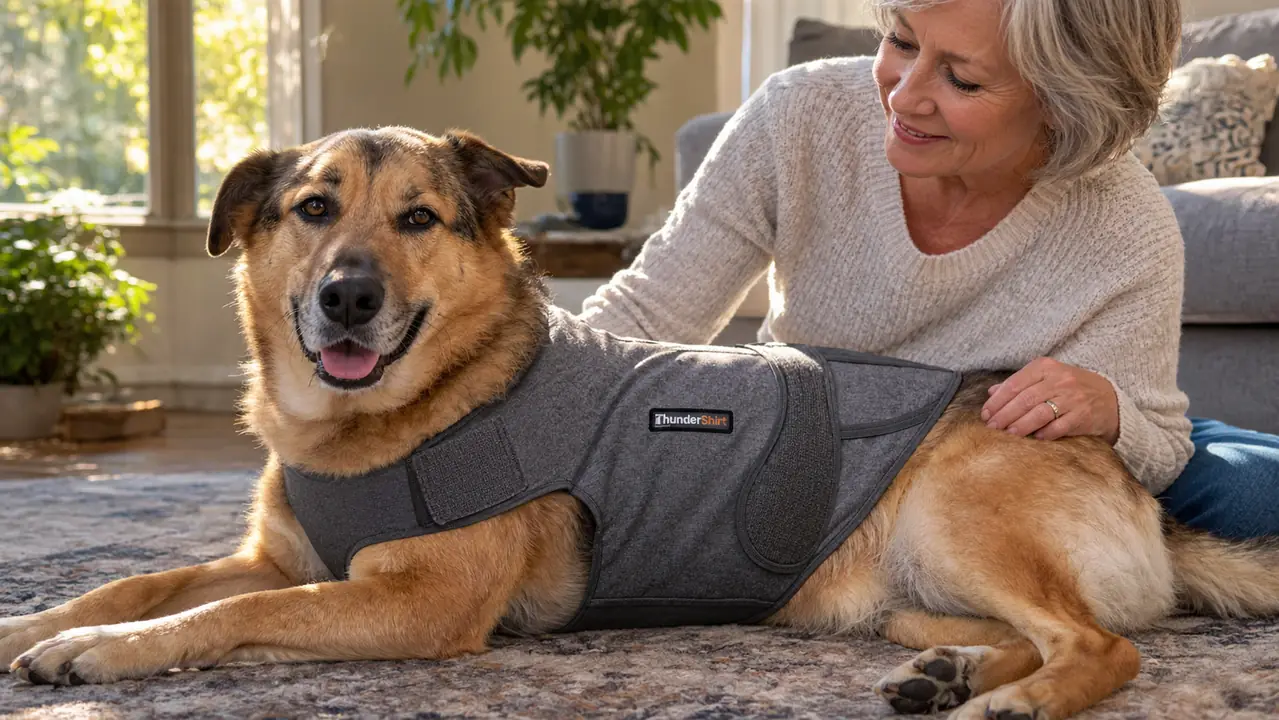
The ThunderShirt is for owners of dogs with mild to moderate anxiety in specific situations. If your dog paces during storms, trembles in the car, or takes too long to settle after a visitor arrives, the vest is worth trying. It is also a good fit if you are already doing training and want a management tool that lowers your dog's baseline stress during the hard parts. It is humane, it has no side effects, and it is easy to put on and take off.
It is especially good for dogs who are anxious but not aggressive. Ridley's reactivity was loud and embarrassing, but he was never a bite risk, so I felt comfortable experimenting with a pressure wrap. If your dog's anxiety comes with aggression, talk to your vet or a certified trainer before adding any new tool. The vest is not a substitute for professional help in those cases.
Who Should Skip It
Skip the ThunderShirt if you are hoping it will fix leash reactivity, separation anxiety, or any behavior that requires training. It will not. I tried it on Ridley's alone-time panic for a month, and it did not make a dent. What helped there was a slow desensitization plan, leaving him for one minute, then five, then fifteen, always returning before he panicked. The vest was not part of that solution.
Skip it if your dog hates wearing clothes. Some dogs never get used to the feeling of a wrap, and forcing it will create a new source of stress. If your dog freezes, tries to wriggle out, or seems more anxious with the vest on, take it off and try something else. The ThunderShirt is a tool, not a test of will.
And skip it if you are looking for a one-time fix. The ThunderShirt is most useful as part of a larger plan that includes training, routine, and sometimes veterinary guidance. On its own, it is a comfort measure. That is valuable, but it is not a cure, and the owners who get the most from it are the ones who understand that going in.
How It Compares to the Alternatives I Tried
Before I settled on the ThunderShirt, I tried a few other things. Calming chews helped Ridley relax but took about an hour to kick in, which made them useless for a sudden storm. A pheromone diffuser seemed to help a little with his general background anxiety, but it did nothing for the acute moments. A weighted blanket-style bed was nice, but he would not stay on it during a storm. The ThunderShirt was the only tool that worked in the moment, and it worked within minutes of being fastened.
That immediacy is the ThunderShirt's real advantage. You can put it on when you see the first sign of anxiety, and it starts working right away. You cannot do that with a chew or a diffuser. For owners who need something that works in the moment, the vest is the better choice.
The tradeoff is that the ThunderShirt only works while it is on. A chew can last for hours. A diffuser works around the clock. The vest is a short-term intervention, which is exactly why it pairs well with training. Use it to lower the stress in the moment, and use training to build the skills that make the vest less necessary over time.
In our house the answer turned out to be both, used for different things. The vest is for the moments I can see coming, like a storm on the radar or a long car ride to the vet. The everyday work on his nerves happens through training and routine, which no vest or chew replaces.
What I Liked
- Works within minutes, so it helps with storms and car rides you can see coming
- Drug-free and easy to take on and off
- Soft, breathable fabric that has held up to repeated washing
- Hook and loop panels make the fit easy to adjust
- Becomes a calming signal over time when used consistently
Where It Falls Short
- Only helps while it is on, so it does not build lasting calm by itself
- Did little for leash reactivity on walks
- Some dogs never get comfortable wearing anything
- Should not be left on for long periods or in hot weather
The Bottom Line After Six Months
I kept the ThunderShirt, and I still use it. It lives in the hall closet, right next to Ridley's leash, and I grab it whenever a storm is forecast or we have a longer car ride ahead. It is not the most exciting piece of gear we own, but it is one of the most reliable. When Ridley needs to settle and I need him to settle now, the vest is what I reach for.
The ThunderShirt is a good product with an honest limitation. It helps with mild to moderate anxiety in specific situations, and it does nothing for behaviors that require training. If you understand that before you buy, you will not be disappointed. If you expect it to fix your dog's reactivity or separation anxiety, you will be, and that is not the product's fault. It is a management tool, and a good one. The training is still up to you.
If I could give one piece of advice, it would be to introduce it on a calm day. Put it on for a few minutes during dinner, pair it with something he loves, and take it off before he has a chance to worry. By the time the first storm rolls in, the vest already means good things.
A management tool that earns its spot in the hall closet
If your dog's anxiety shows up in specific moments, storms, car rides, visitors, the ThunderShirt is worth a try. It worked for Ridley in the situations where it should work, and it was honest about the ones where it couldn't.
Amazon Check Today's Price on Amazon →