
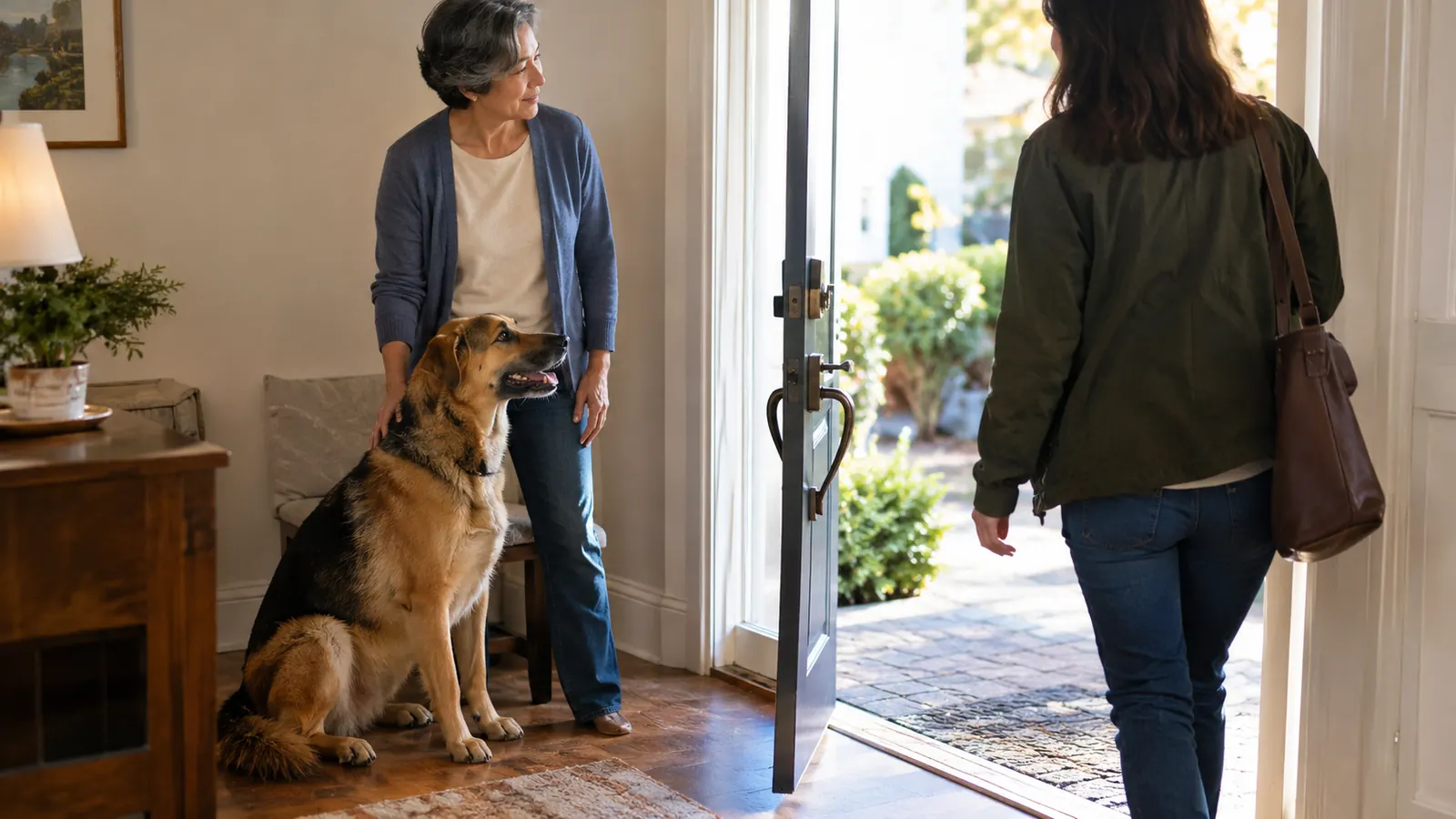
The first time Ridley jumped on a guest, he nearly knocked my sister-in-law's coffee out of her hand. She laughed it off, but I felt my face go red. I had a 55-pound shepherd mix who thought every visitor was a personal invitation to leap. I tried pushing him down, saying no, even holding his collar when the doorbell rang. Nothing stuck. What finally worked was a HoAoOo clicker and a simple rule: reward the behavior I wanted to see, and stop rewarding the jump.
If you are reading this because your dog does the same thing, take a breath. Jumping is not your dog trying to be rude. It is usually excitement, a greeting ritual, or a way to get attention. The fix is not to punish the jump. It is to make the jump pointless and the calm sit very rewarding. Clicker training does exactly that, and you can start today with a few minutes and a pocket full of treats.
The clicker that made our training stick
A simple, loud, consistent click is the whole trick. The HoAoOo clicker has a comfortable button, a wrist strap so you do not drop it mid-session, and a keyring so it can live on your keys. That last part matters more than you think: the training only works if the clicker is actually in your hand when the doorbell rings.
Amazon Check Today's Price on Amazon →Step 1: Charge the clicker before you touch the behavior
Before you can use the clicker to stop jumping, your dog has to understand what the click means. The click is not a command. It is a marker, a tiny sound that says, yes, that exact moment is what earned the treat. Dogs learn this fast, but only if you are consistent.
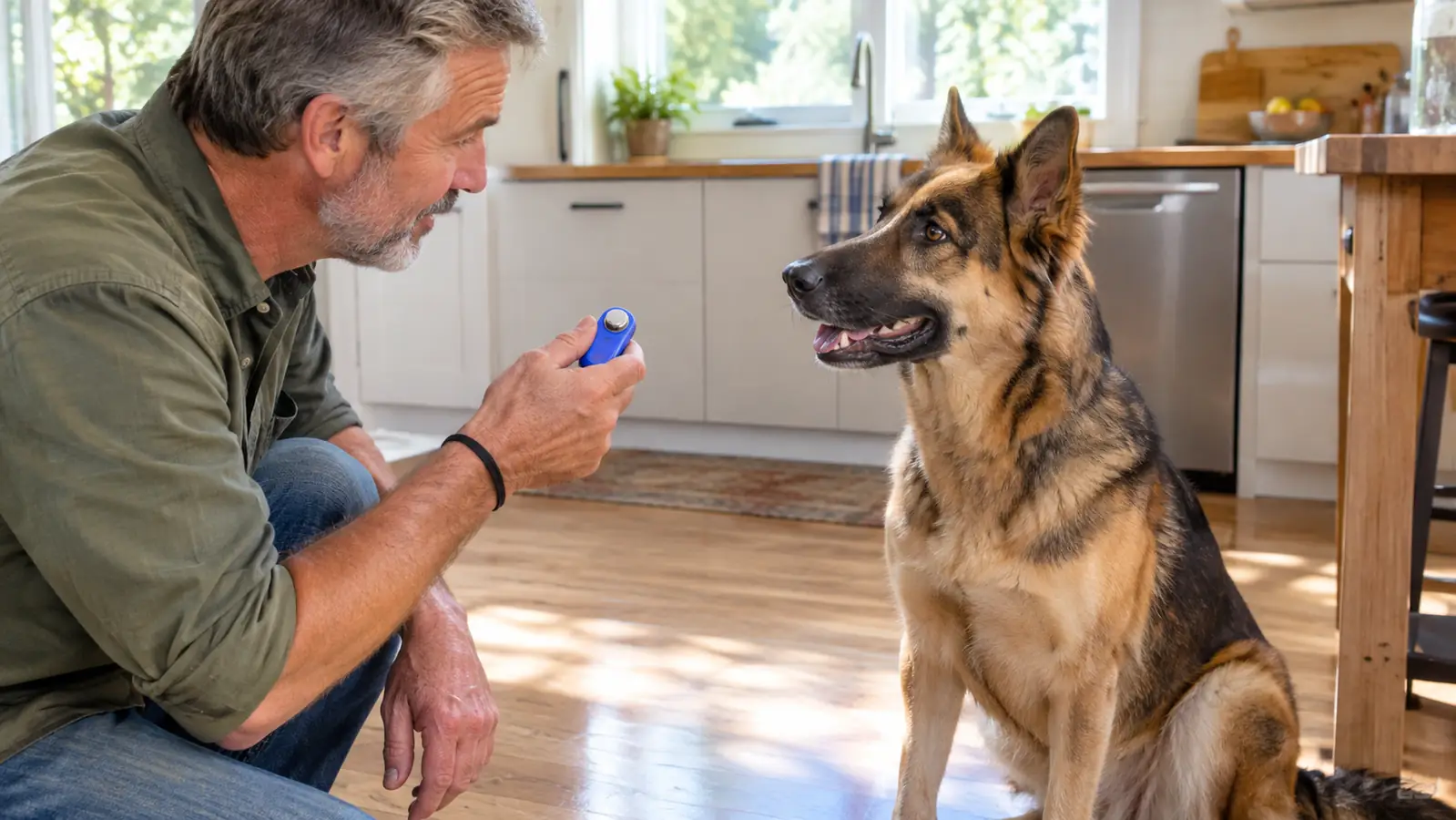
Sit in the kitchen with your dog and a bowl of small, soft treats. Click, then immediately give a treat. Click, treat. Click, treat. Do this ten or fifteen times in a row. You are not asking for any behavior yet. You are simply teaching your dog that the click predicts food. Within a couple of short sessions, you should see your dog's ears perk up at the sound. That is the moment the clicker becomes a tool instead of a noise.
One warning from my own early days: do not click and then fumble for the treat. The whole point is that the click happens at the exact instant of the behavior you want, and the treat follows within a second or two. If you are slow, your dog starts to wonder what the click actually meant. Keep the treats in a bowl or a pouch right next to you, and keep the sessions to about five minutes. I set a timer on my phone for the first week because five minutes feels longer than it is, and Ridley's attention ran out right around the four-minute mark. I also learned to use treats the size of a pea, because a big biscuit meant he was full after six clicks and the session was over before it started.
Step 2: Teach a default sit that pays better than the jump
Dogs repeat what pays. Right now, jumping pays because it gets attention, even if the attention is a push or a scold. Your job is to make the sit pay more. Start in a boring room with no guests, no doorbell, and no distractions. Ask for a sit, click the instant your dog's rear touches the floor, and give a treat. Repeat until your dog offers a sit without being asked.
This is where the HoAoOo clicker earns its keep. The click is instant and consistent, which means your dog gets a crystal-clear signal the moment the sit happens. A word like good can work too, but it is easy to say it at slightly different times or with different energy. The click sounds the same every single time, and that consistency is what makes the behavior stick.
Once your dog is sitting reliably in the kitchen, start adding small distractions. Have your husband walk through the room. Drop a toy on the floor. Knock on the wall. Each time your dog chooses to sit instead of react, click and treat. You are building a habit your dog can fall back on when the real doorbell rings. I spent four days on this step before I moved on, and on day two Ridley broke his sit to investigate a dropped spoon. I said nothing, waited for him to come back, and clicked the next sit. That one reset taught me more than any perfect session did. By the fourth day he was offering a sit the moment I picked up the clicker, before I had even asked for one.
Step 3: Practice the doorbell in slow motion
The real problem is not the sit. It is the doorbell. The sound itself is exciting, and the sight of a person at the door is even more exciting. So you need to practice the whole scene in pieces, starting with the least exciting version.
Have a family member stand outside while you stand by the door with your clicker and treats. Ring the bell once. The instant your dog looks at you instead of the door, click and treat. If your dog runs to the door and jumps, say nothing. Wait for the dog to come back, then ask for a sit and click that. You are not punishing the jump. You are simply making sure the jump never earns a click.
Repeat this until your dog can hear the bell and stay near you. Then open the door a crack. Then open it all the way. Then have the person step inside. Each step is a new level of difficulty, and each level needs its own practice. This is the part most people skip, and it is the part that actually fixes the problem. We worked on the doorbell for six evenings before Ridley could hear it and keep his rear on the floor. On the third evening he bolted for the door, and I let him go, waited, and clicked when he came back and sat. It felt like a failure at the time. It was not. On the fifth evening I rang the bell myself while Glen stood inside, just to check that Ridley was responding to the sound and not to the sight of someone walking up the driveway.
Step 4: Teach your dog what to do instead of jumping
A dog cannot learn what not to do. A dog can only learn what to do. So instead of trying to stop the jump, teach a behavior that makes the jump impossible. The easiest one is a sit, but you can also teach a go to your mat or a touch my hand. Pick one and stick with it.
For Ridley, the mat was the winner. I put a small mat by the front door and trained him to go there and lie down when the doorbell rang. The mat gave him a job, and a dog with a job is a dog who is not launching himself at your guests. The clicker made the training fast because I could mark the exact moment his paws hit the mat, even from across the room. I used a bath mat I already owned, folded in half so it fit the space, and I kept it in the same spot for two months so the location became part of the cue. I measured the spot one afternoon and it was exactly four feet from the door frame, far enough that a guest could step in without tripping over him but close enough that he could still see who had arrived.
If you prefer a sit, that is fine too. The key is to practice it until it is automatic, then use it every single time someone comes to the door. Consistency matters more than cleverness. Your dog is not trying to outsmart you. Your dog is trying to figure out what works, and you are showing them that sitting works better than jumping.
Step 5: Bring in real guests and manage the first few visits
The final step is the real thing: actual guests, actual doorbell, actual excitement. Start with one guest who is willing to help you train. Tell them the plan before they arrive. You will answer the door, your dog will sit or go to the mat, and the guest will ignore the dog until the dog is calm. That last part is hard for guests, because most people want to greet the dog immediately. But it is the part that makes the training work.
When the guest comes in, keep your clicker in your hand. The instant your dog offers the sit or the mat behavior, click and treat. Then have the guest toss a treat to the dog, still without making a big fuss. The dog learns that calm behavior gets the guest's attention and the treats, while jumping gets nothing at all.
Expect a few messy visits at first. I had a neighbor who came by three times in one week, and Ridley regressed on visit two before he improved on visit three. That is normal. The training is not a straight line. What matters is that you keep the clicker handy, keep the treats flowing for the behavior you want, and do not accidentally reward the jump by petting or scolding. Silence and stillness are your tools for the jump. Click and treat are your tools for the sit. On the third visit, my neighbor walked in and Ridley went straight to his mat without a single prompt, and I nearly cried into the treat pouch.
What Else Helps
Clicker training is the core of the fix, but a few extras made the whole process easier for us. A treat pouch that clips to your waist means you are never fumbling for kibble when the doorbell rings. A short leash hooked to your belt or a piece of furniture gives you a way to prevent practice jumps without yanking. And a sign on the door that says please ignore the dog until I say okay takes the pressure off your guests and puts it where it belongs, on the training plan.
Exercise also matters more than people expect. A dog who has had a good walk is a dog who is easier to train. I learned to take Ridley for a brisk walk before any visitor came over, especially in the first few weeks. A tired dog is not a perfect dog, but a tired dog is a dog who can actually hear the click. On the days I skipped the walk, our sessions were twice as long and half as useful, so the walk became part of the routine, not an optional extra. I also started keeping a small jar of treats on the shelf by the door, so I never had to leave the doorway to reload in the middle of a visit.
The click is not a command. It is a promise that the exact moment you just saw is the moment that pays.
Keep the clicker where you can actually find it
The HoAoOo clicker comes with a wrist strap and a keyring, which means it can live on your keys, your treat pouch, or your kitchen drawer handle. That is the difference between training every day and training only when you remember. Grab one and start with five minutes tonight.
Amazon Check Today's Price on Amazon →