
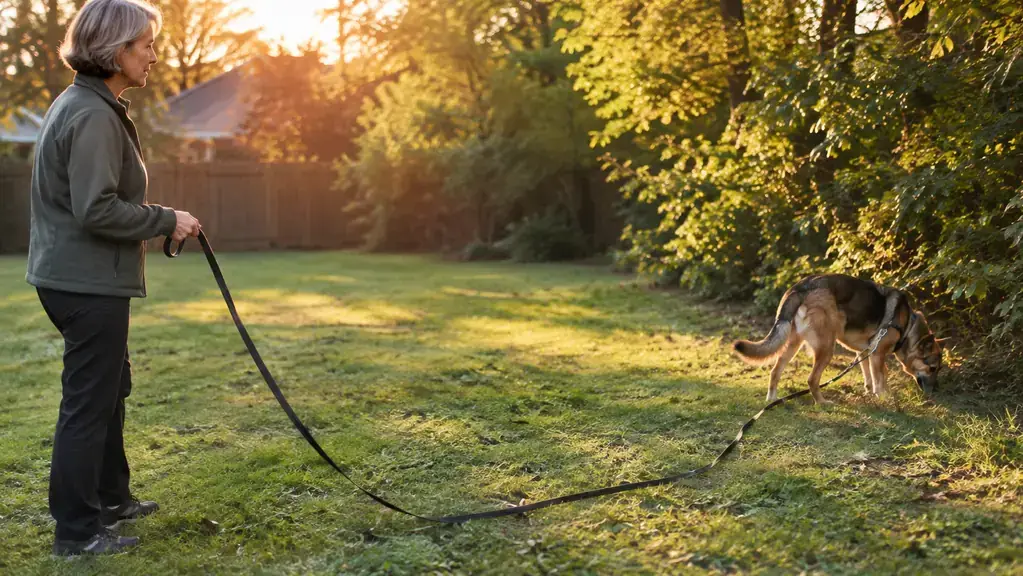
I spent the first six months with Ridley convinced that a fenced yard was the only way he would ever get to run. He was a 55-pound shepherd mix with a nose that could find a scent from three counties away, and the one time I let him off leash in an open field, he was gone. Not running away, exactly. Just gone, following something I could not see, until my voice meant nothing to him. I stood there with a leash in my hand and no dog on the end of it, and I knew I needed a different plan.
The plan turned out to be a long training line from Hi Kiss. Twenty feet of lightweight rope that gave Ridley room to roam and me a way to keep my promise that he would come back. It is not a magic fix. It is a tool that lets you practice recall in the real world, where the smells are interesting and the squirrels are fast. Here are the ten reasons it changed the way we train.
Give your dog room to roam and a reason to come back
A 20-foot training line from Hi Kiss turns any open space into a safe training ground. No fence required, no chasing required, just short sessions and a dog who learns that coming back is the best part of the game.
Amazon Check Today's Price on Amazon →It gives your dog real distance to practice with
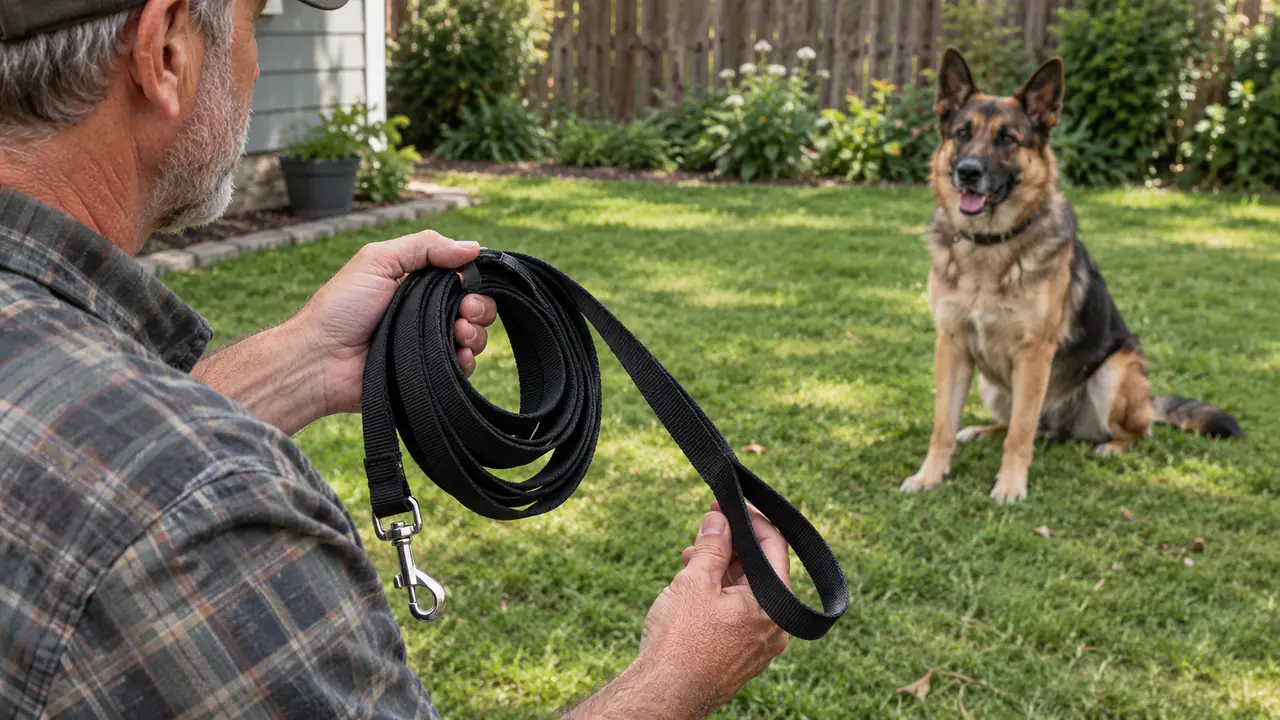
Recall is not a trick you practice at three feet. Your dog needs to learn that 'come' means the same thing at the far end of a field as it does in the kitchen. A 20-foot line from Hi Kiss gives you that distance without the risk of a dog who is not ready for freedom. You can start at ten feet, then twelve, then the full length, and your dog builds the habit of turning toward your voice from farther and farther away.
It keeps your dog safe while they still have a puppy brain
Ridley was eighteen months old when he came home, which is old enough to be strong and young enough to have terrible judgment. A long line meant he could bolt after a rabbit and I could step on the line before he reached the road. That safety net is the whole point. You are not holding your dog back. You are holding the door open while they learn the rules.
It lets you reward the return, not punish the wander
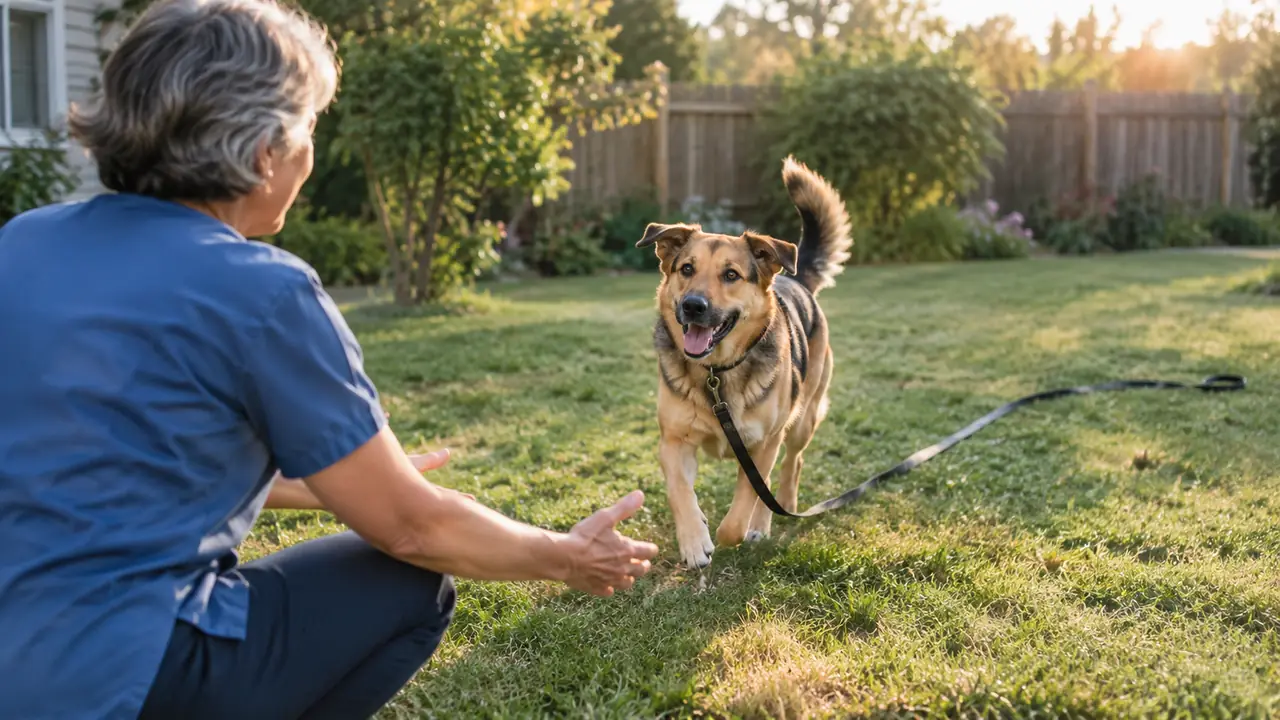
The biggest mistake I made early on was calling Ridley only when I was annoyed with him. He learned that 'come' meant the fun was over. With a long line, you can call your dog, let them arrive, give them a treat, and then say 'go play' and let them head back out. The recall becomes the start of something good instead of the end of the fun. That single change did more for his recall than any other trick I tried.
It teaches your dog that your voice matters even at a distance
Dogs are smart about context. Ridley would come when called in the kitchen, ignore me in the backyard, and act like I did not exist at the park. The long line let me practice in all those places, with the line as my backup. After a few weeks, he started checking in with me on his own, just a glance over the shoulder to see where I was. That is the moment recall stops being a command and starts being a conversation.
It is light enough to carry on every single walk
A training tool only works if you actually have it with you. The Hi Kiss line is lightweight and packs down small, so it lives in my coat pocket from April through November. I use it at the school field, at the edge of the woods, and in the backyard. The walks where I did not bring it were always the walks where I wished I had it.
It gives you a way to practice in places that are not fenced
Not everyone has a fenced yard. I have one, but it is not huge, and Ridley needed more room than it offered. The long line turned the local school field into our training ground. You can use it at a park, a beach, a campground, or a quiet stretch of trail. Anywhere you can see your dog, you can practice recall, and that is a lot more useful than waiting for the perfect fenced space.
It builds your dog's confidence without building bad habits
A dog who never gets to explore becomes a dog who explodes the moment they get freedom. The long line gives Ridley room to sniff, wander, and make choices, while I keep the boundary safe. He got to practice being independent in small doses, and I got to practice trusting him. By the time we worked up to off-leash time in safe places, he already knew the rules because he had practiced them a hundred times on the line.
It is easier on your arm than a regular leash
A six-foot leash means your dog is always at the end of your arm, and a strong dog like Ridley can make that arm very tired. With a long line, the dog moves ahead, you stay relaxed, and the line does the work. You are not bracing against pulling because the dog is not pulling. They are just moving, and you are just walking. My shoulders thanked me within a week.
It works for puppies, teenagers, and stubborn adults alike
The long line is not a puppy tool. It works for any dog who needs to learn that coming back is worth it. A puppy can drag a light line around the yard and learn the game early. A teenage dog with a sudden interest in squirrels can practice with a safety net. And a stubborn adult rescue, like Ridley was, can finally build a reliable recall from scratch. The line meets your dog where they are.
It turns recall practice into a game your dog loves
The best training does not feel like training. With the long line, I would call Ridley, he would sprint back, get a treat, and then I would say 'go' and he would tear off again. We did this until he was tired and happy, and he started offering the behavior on his own. Now when I say 'come' in a safe place, his ears go up and his feet start moving. That is what a training tool should do: make the right choice the easy choice.
What I'd Skip
I would skip the long line if your dog is a serious puller who has not learned basic leash manners yet. A 20-foot line gives a strong dog a lot of room to build speed, and if you cannot stop them at the end of it, you are in for a rough time. I would also skip it in places where you cannot see your dog, like dense woods or a busy park. The line is a training tool, not a babysitter. You still have to be present, watch where the line is, and keep your feet clear of it. And if you are looking for a tool that will fix recall without any practice, this is not it. Nothing does that.
After a few weeks, Ridley started checking in with me on his own, just a glance over the shoulder to see where I was. That is the moment recall stops being a command and starts being a conversation.
Start with twenty feet and a pocket full of treats
You do not need a fenced field or a professional trainer to build a reliable recall. You need a long line, a quiet place to practice, and a dog who learns that coming back to you is the best part of the walk. The Hi Kiss training line is the tool I reach for every single day.
Amazon Check Today's Price on Amazon →