
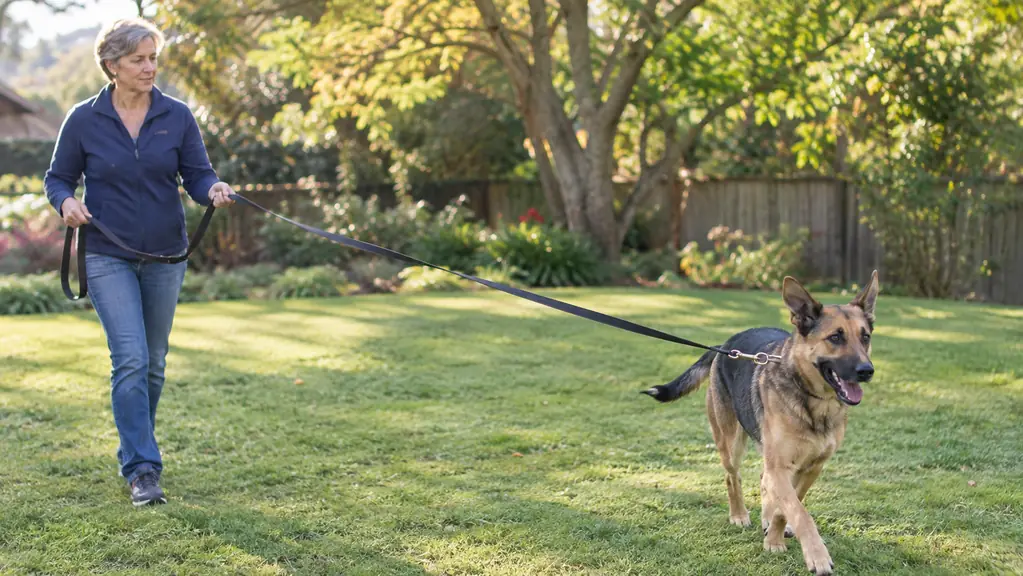
If you have a stubborn dog, you already know the feeling. You call, they look at you, and then they keep sniffing the same patch of grass like you said nothing at all. I have been there more times than I can count with my shepherd mix Ridley, and I will tell you the honest truth: the problem was never that he was dumb. The problem was that I had no way to make coming back more rewarding than whatever he was doing, and no way to keep him safe while we figured it out.
A long training lead changed that for us. It is a simple piece of gear, just a long leash, usually 20 to 50 feet, that gives your dog freedom to roam while you keep a gentle connection. It is not a retractable leash, and it is not a punishment tool. It is a way to practice recall in the real world without risking your dog's safety. The Hi Kiss long training lead is the one we used, and this is the exact step-by-step plan that finally got Ridley to come when I called.
The 20-foot Hi Kiss lead is the one that made recall practice possible for us
It gives you the freedom to let your dog roam while keeping a connection you can actually use. No retractable mechanism, no tangle-prone handle, just a long, visible line that makes training safer and simpler.
Amazon Check Today's Price on Amazon →Step 1: Start Indoors Where There Are No Distractions
I know it feels like the real problem is outside, but trust me, start in the kitchen. The whole point of the first step is to build a rock-solid association between the word "come" and something wonderful, before you ever ask for it in a place where the dog has better options. With Ridley, I started in the kitchen on a Tuesday morning in early March, before his breakfast, when he was hungry enough to care about the tiny pieces of boiled chicken I had set aside. I stood a few feet away, said his name in a happy voice, and the instant he looked at me, I said "come" and backed up a few steps while holding the treat. When he followed, I marked it with a yes and gave him the treat. We did this maybe five times a day for a week. It sounds almost too simple, but the repetition is what builds the habit.
The key is to make yourself more interesting than the floor, the window, or the couch. Use small, high-value treats, the kind your dog only gets during training. For Ridley, that was boiled chicken, cut into pea-sized pieces, kept in a little container in my pocket so he could smell it the whole time. I tried his regular kibble first and he looked at me like I was wasting his time, so I switched. And never call your dog to you for something unpleasant, like a bath or nail trims. I made that mistake once, called Ridley in for a bath, and spent the next two weeks watching him weigh his options every time I said his name. If "come" only ever means good things, your dog will start to believe you.
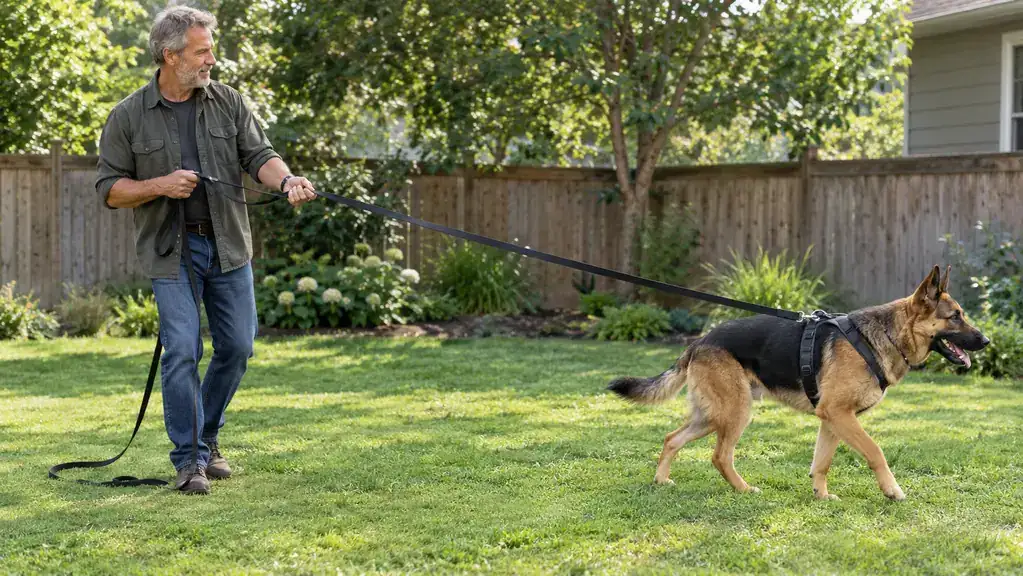
Step 2: Add the Long Lead in a Fenced Area
Once Ridley was reliably turning toward me indoors, we moved to the backyard. This is where the long training lead earns its keep. I clipped the Hi Kiss lead to his harness, let him wander to the end of the 20 feet, and then I called him in the same happy voice we had practiced indoors. The first few times, he did not come. He was too busy investigating the fence line, and honestly, I do not blame him. There were smells out there that no piece of boiled chicken could compete with. That is exactly why the lead matters. I did not yank him or drag him. I simply stood still, waited for him to look at me, said "come" again, and gave a gentle, steady pressure on the lead while I backed up. The moment he took a step toward me, I released the pressure, marked it, and made a big deal out of it.
This is the part that takes patience. Some dogs figure it out in a few sessions. Ridley took a couple of weeks, and there were days when we only got one good response in the whole session. I learned to quit while we were ahead. If he came twice in a row, we stopped and went inside. The important thing is to never turn the lead into a tug-of-war. The lead is not there to force your dog to come. It is there to remind them that coming is possible, and to keep them safe while they learn.
Step 3: Make Coming to You the Best Game in the World
Here is the trick that changed everything for us. Instead of calling Ridley and then sending him away again, I started calling him to me, giving him a treat, and then releasing him with a cheerful "go play!" That way, coming to me was not the end of the fun. It was a quick pit stop that led to more fun. I also started playing a version of the recall game where I would run away from him while calling his name. A dog that is chasing you is a dog that is coming. When he caught up, we would have a tiny party, a few treats, some ear scratches, and then he was free to go explore again.
The long lead let me do this safely in the backyard without worrying about him bolting toward the street. He got to practice making the choice to come, over and over, in a space where I could still keep him safe. That repetition is what builds a reliable recall. I also learned to vary the rewards. Sometimes it was chicken, sometimes it was a game of tug with his favorite rope toy, and sometimes it was just me acting like a fool and clapping my hands. The variety kept him guessing, and a dog that is guessing is a dog that is paying attention.
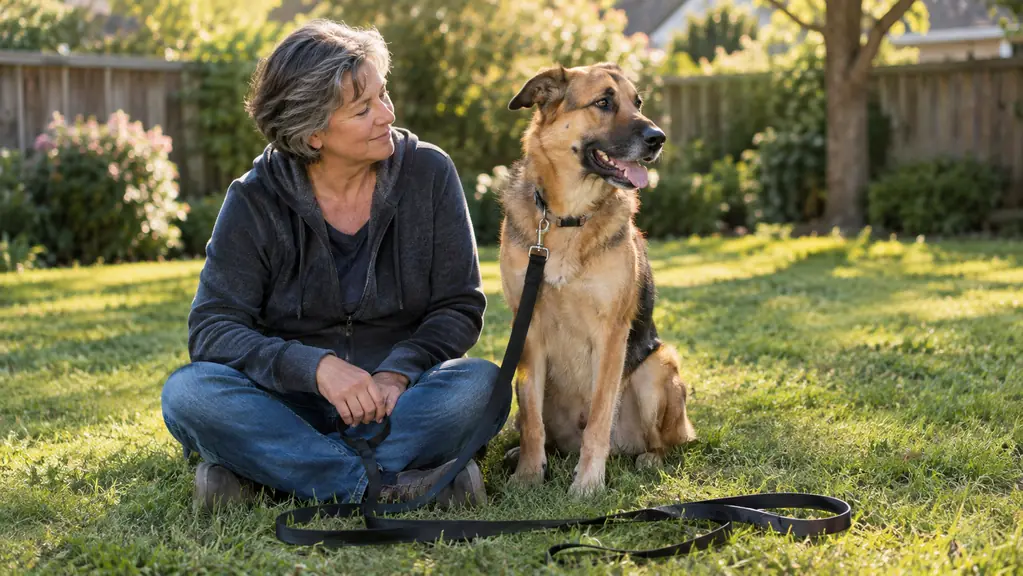
Step 4: Move to a Quiet Public Space
The backyard is a controlled environment. The real world is not. Once Ridley was coming reliably in the yard, we moved to a quiet schoolyard after hours, still on the long lead. I picked a time when there were no other dogs, no kids, and no distractions, and we practiced the exact same game. The first session in the schoolyard, Ridley was so overwhelmed that he would not take treats at all. He just stood there with his ears pinned back, watching a flag flap in the wind. That was my sign to make the space smaller, move closer to the car, and just sit with him until he relaxed. We did not practice recall that day. We practiced being calm in a new place.
When he was ready, we started the game again. I kept the sessions short, five to ten minutes, and I always ended on a success. If he came twice in a row, we quit while we were ahead. Ending on a win is one of the best habits you can build into your training. I also started bringing a mat for him to sit on between reps, which gave him a clear job to do and helped him settle. It took three visits to that schoolyard before he offered me a reliable recall, and that was fine. Slow progress is still progress.
Step 5: Build Distance and Distraction Slowly
The last step is the one most people rush. They get one good recall in the park and immediately try it off-leash in a busy place. That is how dogs get lost. Instead, I built up distance and distraction in tiny increments, always on the long lead. One week, I would practice with a person standing 50 feet away. The next week, I would practice with a person walking by. The week after that, I would practice near a playground, still far enough away that Ridley could focus. Every time he succeeded, we celebrated. Every time he struggled, I made the task easier again.
What I did with Ridley was change only one thing at a time. If we moved to a new park, I kept the distance short. If I let out more line, I picked a quiet time of day. If there were other dogs in sight, I shortened the line and made the reward bigger. Every time I tried to change two things at once, his recall fell apart and we had to back up a step.
The Hi Kiss lead comes in lengths up to 100 feet, which is wonderful for this stage. A longer line lets you practice recall from a real distance while still keeping your dog safe. Just be careful with the longer lengths, they are easier to step on and harder to manage. I found 20 feet to be the sweet spot for most of our training. It was long enough to give Ridley real freedom, but short enough that I could still feel what he was doing and react before he got into trouble.
What Else Helps
A long training lead is a tool, not a magic wand. The things that helped us most were management and consistency. I stopped letting Ridley rehearse bad behavior, which meant no more off-leash time in unfenced areas until his recall was solid. I also kept training sessions short and frequent, five minutes a day beats one hour once a week. I learned to check my own emotions too. Dogs read us better than we read them. If I was frustrated, Ridley felt it and the training went backwards. When I slowed down, took a breath, and made the game fun again, he started making progress. Patience is not a personality trait. It is a skill you practice, just like recall.
A few practical habits made the long lead easier to live with. Clip it to a harness, never a collar, so a sudden stop does not jerk the neck. Wear light gloves and let the line run through your hand rather than wrapping it around your fingers. Let the line drag on the ground in open areas so you can step on it if you need to, and keep it out of the way of bikes and other people on shared paths. And always end the session with a recall he gets right, followed by something fun, so coming back to you stays the best part of the day.
The lead is not there to force your dog to come. It is there to remind them that coming is possible, and to keep them safe while they learn.
Give your dog the chance to practice recall safely
A long training lead turns an unsafe situation into a training opportunity. The Hi Kiss lead is durable, visible, and long enough to give your dog real freedom while you keep them safe.
Amazon Check Today's Price on Amazon →